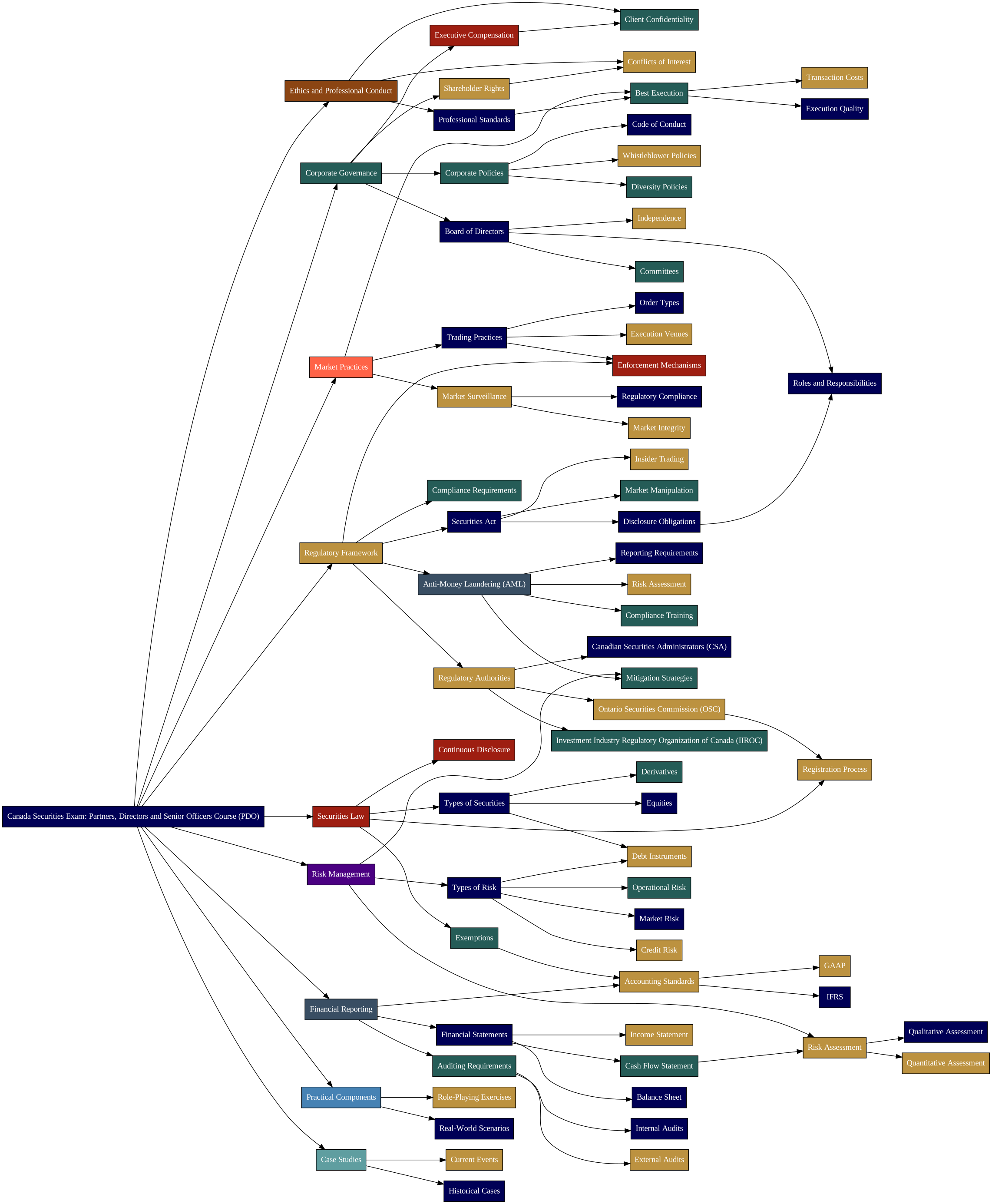
Quiz-summary
0 of 30 questions completed
Questions:
- 1
- 2
- 3
- 4
- 5
- 6
- 7
- 8
- 9
- 10
- 11
- 12
- 13
- 14
- 15
- 16
- 17
- 18
- 19
- 20
- 21
- 22
- 23
- 24
- 25
- 26
- 27
- 28
- 29
- 30
Information
Premium Practice Questions
You have already completed the quiz before. Hence you can not start it again.
Quiz is loading...
You must sign in or sign up to start the quiz.
You have to finish following quiz, to start this quiz:
Results
0 of 30 questions answered correctly
Your time:
Time has elapsed
Categories
- Not categorized 0%
- 1
- 2
- 3
- 4
- 5
- 6
- 7
- 8
- 9
- 10
- 11
- 12
- 13
- 14
- 15
- 16
- 17
- 18
- 19
- 20
- 21
- 22
- 23
- 24
- 25
- 26
- 27
- 28
- 29
- 30
- Answered
- Review
-
Question 1 of 30
1. Question
Sarah, a Senior Officer at a Canadian securities firm, receives an anonymous tip alleging that a high-net-worth client, Mr. Thompson, is using his account to launder money. The tip details unusual transaction patterns, including large, frequent deposits followed by immediate withdrawals to various international accounts. Initial review of Mr. Thompson’s KYC documentation reveals some inconsistencies and outdated information. Sarah is concerned about potential regulatory breaches and the firm’s reputation. Considering Sarah’s responsibilities as a Senior Officer under Canadian securities regulations and the firm’s compliance policies regarding anti-money laundering, what is the *most* appropriate course of action she *must* take immediately upon receiving this information? The firm has a clearly defined compliance department and internal investigation protocols.
Correct
The scenario presented requires an understanding of the “know your client” (KYC) rule and the associated responsibilities of partners, directors, and senior officers in a securities firm. Specifically, it tests the knowledge of what actions a senior officer *must* take when presented with evidence suggesting a violation of KYC protocols, particularly concerning potential money laundering activities.
The correct course of action isn’t simply documenting the concerns or delegating the investigation. While documentation is important, it’s a passive step. Delegating the investigation without oversight abdicates responsibility. Immediately reporting to the compliance department is also insufficient, as the compliance department may require further escalation depending on the severity and scope of the potential violation. The senior officer has a duty to ensure the investigation is thorough and prompt.
The most appropriate action is to immediately initiate a thorough internal investigation *and* simultaneously report the suspected violation to the compliance department. This ensures that the matter is investigated with appropriate urgency and expertise, and that the firm meets its regulatory obligations regarding reporting suspicious activities. This dual approach allows for immediate action within the firm while also alerting the appropriate compliance personnel to ensure proper oversight and external reporting if necessary. The senior officer must demonstrate a proactive and responsible approach to addressing potential regulatory breaches, safeguarding the firm’s reputation and ensuring compliance with anti-money laundering regulations. The internal investigation should include a review of the client’s account activity, KYC documentation, and any other relevant information. The compliance department can then assess the findings of the investigation and determine whether further action, such as reporting to FINTRAC, is required.
Incorrect
The scenario presented requires an understanding of the “know your client” (KYC) rule and the associated responsibilities of partners, directors, and senior officers in a securities firm. Specifically, it tests the knowledge of what actions a senior officer *must* take when presented with evidence suggesting a violation of KYC protocols, particularly concerning potential money laundering activities.
The correct course of action isn’t simply documenting the concerns or delegating the investigation. While documentation is important, it’s a passive step. Delegating the investigation without oversight abdicates responsibility. Immediately reporting to the compliance department is also insufficient, as the compliance department may require further escalation depending on the severity and scope of the potential violation. The senior officer has a duty to ensure the investigation is thorough and prompt.
The most appropriate action is to immediately initiate a thorough internal investigation *and* simultaneously report the suspected violation to the compliance department. This ensures that the matter is investigated with appropriate urgency and expertise, and that the firm meets its regulatory obligations regarding reporting suspicious activities. This dual approach allows for immediate action within the firm while also alerting the appropriate compliance personnel to ensure proper oversight and external reporting if necessary. The senior officer must demonstrate a proactive and responsible approach to addressing potential regulatory breaches, safeguarding the firm’s reputation and ensuring compliance with anti-money laundering regulations. The internal investigation should include a review of the client’s account activity, KYC documentation, and any other relevant information. The compliance department can then assess the findings of the investigation and determine whether further action, such as reporting to FINTRAC, is required.
-
Question 2 of 30
2. Question
Sarah Chen is the Chief Compliance Officer (CCO) at Maple Leaf Securities, a full-service investment dealer. She receives an anonymous tip alleging that David Miller, a Senior Vice President in the Investment Banking division, has been trading in the shares of GreenTech Innovations Inc. prior to a major announcement regarding a potential merger, a deal on which Maple Leaf Securities is advising. The tip suggests Miller may have received confidential information about the impending merger through his role at the firm. Internal policies strictly prohibit trading on material non-public information and require all employees to report any potential conflicts of interest. Miller has a stellar reputation and is a key revenue generator for the firm. What is Sarah Chen’s MOST appropriate course of action in this situation, considering her responsibilities as CCO under Canadian securities regulations and best practices for risk management and ethical conduct?
Correct
The scenario presents a complex situation involving a potential conflict of interest, ethical considerations, and regulatory compliance within an investment dealer. The key is to identify the most appropriate course of action for the Chief Compliance Officer (CCO) when faced with a situation where a senior officer is potentially violating internal policies and possibly securities regulations related to insider trading or misuse of confidential information. The CCO’s primary responsibility is to ensure the firm’s compliance with all applicable laws, regulations, and internal policies.
Option a) reflects the CCO’s duty to investigate the matter thoroughly and independently. This involves gathering evidence, interviewing relevant parties, and documenting the findings. If the investigation reveals evidence of a violation, the CCO must report it to the appropriate regulatory authorities, regardless of the senior officer’s position. This is aligned with the CCO’s oversight function and responsibility to maintain the integrity of the firm and the market.
Option b) is incorrect because delaying the investigation to consult with the senior officer could compromise the integrity of the investigation and allow the senior officer to potentially conceal or destroy evidence. This would be a breach of the CCO’s duty to act independently and objectively.
Option c) is incorrect because relying solely on the senior officer’s assurance of compliance is insufficient. The CCO has a duty to conduct an independent investigation to verify the senior officer’s claim and ensure that no violations have occurred.
Option d) is incorrect because ignoring the potential violation would be a serious breach of the CCO’s duty to ensure compliance. The CCO cannot turn a blind eye to potential violations, even if they involve a senior officer. Failing to act could expose the firm to significant legal and regulatory risks.
Therefore, the CCO’s most appropriate course of action is to initiate an immediate and independent investigation, document the findings, and report any violations to the appropriate regulatory authorities. This is the only way to ensure that the firm is complying with all applicable laws, regulations, and internal policies.
Incorrect
The scenario presents a complex situation involving a potential conflict of interest, ethical considerations, and regulatory compliance within an investment dealer. The key is to identify the most appropriate course of action for the Chief Compliance Officer (CCO) when faced with a situation where a senior officer is potentially violating internal policies and possibly securities regulations related to insider trading or misuse of confidential information. The CCO’s primary responsibility is to ensure the firm’s compliance with all applicable laws, regulations, and internal policies.
Option a) reflects the CCO’s duty to investigate the matter thoroughly and independently. This involves gathering evidence, interviewing relevant parties, and documenting the findings. If the investigation reveals evidence of a violation, the CCO must report it to the appropriate regulatory authorities, regardless of the senior officer’s position. This is aligned with the CCO’s oversight function and responsibility to maintain the integrity of the firm and the market.
Option b) is incorrect because delaying the investigation to consult with the senior officer could compromise the integrity of the investigation and allow the senior officer to potentially conceal or destroy evidence. This would be a breach of the CCO’s duty to act independently and objectively.
Option c) is incorrect because relying solely on the senior officer’s assurance of compliance is insufficient. The CCO has a duty to conduct an independent investigation to verify the senior officer’s claim and ensure that no violations have occurred.
Option d) is incorrect because ignoring the potential violation would be a serious breach of the CCO’s duty to ensure compliance. The CCO cannot turn a blind eye to potential violations, even if they involve a senior officer. Failing to act could expose the firm to significant legal and regulatory risks.
Therefore, the CCO’s most appropriate course of action is to initiate an immediate and independent investigation, document the findings, and report any violations to the appropriate regulatory authorities. This is the only way to ensure that the firm is complying with all applicable laws, regulations, and internal policies.
-
Question 3 of 30
3. Question
A senior officer at a Canadian investment dealer receives an anonymous tip alleging that a senior trader in the firm’s fixed income department has been consistently favoring a particular client, a high-net-worth individual with close personal ties to the trader, by allocating them a disproportionate share of profitable bond offerings. The tip further suggests that the trader may have been aware of material non-public information regarding some of these offerings and that supervisory oversight of the trading desk has been lax, with compliance procedures seemingly disregarded. The senior officer is concerned about potential breaches of securities regulations, conflicts of interest, and reputational damage to the firm. Considering the duties and responsibilities of a senior officer under Canadian securities law and the firm’s internal policies, what is the MOST appropriate course of action for the senior officer to take in this situation?
Correct
The scenario presents a complex situation involving potential conflicts of interest, inadequate supervision, and potential regulatory breaches. The core issue revolves around the responsibility of senior officers and directors in ensuring compliance and ethical conduct within the firm.
The most appropriate course of action is to immediately launch an internal investigation, suspend the trader pending the outcome, and promptly report the findings to the relevant regulatory bodies. This approach demonstrates a commitment to addressing the situation seriously and transparently. It allows the firm to gather all necessary information, assess the extent of the misconduct, and take appropriate disciplinary action. Reporting to the regulators is crucial for maintaining the firm’s integrity and complying with regulatory requirements.
Failing to investigate thoroughly and report to regulators could lead to severe consequences, including regulatory sanctions, reputational damage, and potential legal liabilities for the firm and its senior officers. Addressing the situation promptly and decisively is essential for protecting the firm’s interests and upholding its ethical obligations. While seeking legal counsel is prudent, it should not delay the immediate steps of investigation and suspension. Ignoring the situation or downplaying its significance would be a serious breach of duty and could exacerbate the potential harm.
The correct response encapsulates the immediate and necessary actions required of a senior officer upon discovering potential misconduct within their firm. It prioritizes investigation, suspension, and regulatory reporting, reflecting a proactive and responsible approach to risk management and compliance.
Incorrect
The scenario presents a complex situation involving potential conflicts of interest, inadequate supervision, and potential regulatory breaches. The core issue revolves around the responsibility of senior officers and directors in ensuring compliance and ethical conduct within the firm.
The most appropriate course of action is to immediately launch an internal investigation, suspend the trader pending the outcome, and promptly report the findings to the relevant regulatory bodies. This approach demonstrates a commitment to addressing the situation seriously and transparently. It allows the firm to gather all necessary information, assess the extent of the misconduct, and take appropriate disciplinary action. Reporting to the regulators is crucial for maintaining the firm’s integrity and complying with regulatory requirements.
Failing to investigate thoroughly and report to regulators could lead to severe consequences, including regulatory sanctions, reputational damage, and potential legal liabilities for the firm and its senior officers. Addressing the situation promptly and decisively is essential for protecting the firm’s interests and upholding its ethical obligations. While seeking legal counsel is prudent, it should not delay the immediate steps of investigation and suspension. Ignoring the situation or downplaying its significance would be a serious breach of duty and could exacerbate the potential harm.
The correct response encapsulates the immediate and necessary actions required of a senior officer upon discovering potential misconduct within their firm. It prioritizes investigation, suspension, and regulatory reporting, reflecting a proactive and responsible approach to risk management and compliance.
-
Question 4 of 30
4. Question
A director of a Canadian investment firm receives an internal audit report highlighting potential weaknesses in the firm’s KYC/AML compliance program. Specifically, the report indicates a higher-than-average number of accounts opened without proper identification verification and a lack of documented source of funds for several high-value transactions. The director, a long-time friend of the firm’s CEO, raises the issue briefly with the CEO, who assures them that the problems are being addressed and that a new compliance officer has been hired. The director, satisfied with this explanation and not wanting to create tension, takes no further action to independently verify the CEO’s claims or to ensure that the necessary remedial measures are implemented. Several months later, the firm is subject to a regulatory investigation that reveals significant and ongoing breaches of KYC/AML regulations, resulting in substantial fines and reputational damage. Based on these circumstances, what is the most accurate assessment of the director’s potential liability?
Correct
The scenario describes a situation where a director, despite receiving information suggesting potential regulatory breaches related to KYC/AML compliance, fails to adequately investigate or escalate the matter. This inaction directly contravenes their fiduciary duty of care and diligence. Directors are expected to act as reasonably prudent individuals in similar circumstances. This includes being proactive in addressing potential risks and ensuring compliance with regulations. The failure to act on red flags and investigate further constitutes a breach of this duty. Simply relying on management assurances without independent verification or further inquiry is insufficient, especially when there is reason to believe that those assurances might be unfounded. The director’s responsibility extends beyond passive acceptance of information; it requires active engagement and oversight to protect the interests of the firm and ensure compliance with legal and regulatory requirements. The director’s actions must demonstrate a commitment to due diligence and a willingness to challenge management when necessary. The core issue is the director’s lack of independent judgment and failure to fulfill their oversight responsibilities in the face of concerning information. This constitutes a breach of their duty of care, making them potentially liable for any resulting damages or regulatory sanctions.
Incorrect
The scenario describes a situation where a director, despite receiving information suggesting potential regulatory breaches related to KYC/AML compliance, fails to adequately investigate or escalate the matter. This inaction directly contravenes their fiduciary duty of care and diligence. Directors are expected to act as reasonably prudent individuals in similar circumstances. This includes being proactive in addressing potential risks and ensuring compliance with regulations. The failure to act on red flags and investigate further constitutes a breach of this duty. Simply relying on management assurances without independent verification or further inquiry is insufficient, especially when there is reason to believe that those assurances might be unfounded. The director’s responsibility extends beyond passive acceptance of information; it requires active engagement and oversight to protect the interests of the firm and ensure compliance with legal and regulatory requirements. The director’s actions must demonstrate a commitment to due diligence and a willingness to challenge management when necessary. The core issue is the director’s lack of independent judgment and failure to fulfill their oversight responsibilities in the face of concerning information. This constitutes a breach of their duty of care, making them potentially liable for any resulting damages or regulatory sanctions.
-
Question 5 of 30
5. Question
A director of a securities firm, “Alpha Investments,” becomes aware of a pattern of questionable practices within the firm’s retail division. Specifically, the director observes that some advisors are consistently recommending high-risk investments to clients with conservative risk profiles, potentially violating suitability requirements. Furthermore, the director suspects that some new account documentation is incomplete, raising concerns about compliance with Know Your Client (KYC) regulations. The director confronts the CEO, who dismisses the concerns as “minor issues” and suggests that the director is “overreacting.” The CEO assures the director that the firm’s revenue targets are paramount and that strict adherence to every regulation would hinder the firm’s profitability. The director, feeling uneasy about the situation and the CEO’s response, seeks your advice on the appropriate course of action, considering their fiduciary duty and potential liability under Canadian securities laws and regulations. What is the MOST appropriate course of action for the director?
Correct
The scenario presents a complex situation involving potential regulatory violations and ethical breaches within a securities firm. The core issue revolves around the duty of a director to act in the best interests of the firm and its clients, while also upholding regulatory standards. The director’s knowledge of potential misconduct, specifically regarding suitability assessments and KYC (Know Your Client) obligations, triggers a responsibility to take appropriate action. Ignoring such information constitutes a breach of fiduciary duty and could lead to regulatory sanctions.
The correct course of action involves several steps. First, the director should immediately escalate the concerns internally. This includes notifying the firm’s compliance department, senior management, or a designated internal reporting mechanism. It’s crucial to document the concerns and the steps taken to address them. Second, if the internal investigation is deemed inadequate or if the misconduct persists, the director has a duty to report the matter to the relevant regulatory authority, such as the Investment Industry Regulatory Organization of Canada (IIROC) or the applicable provincial securities commission. This is a critical step to protect investors and maintain the integrity of the market. The decision to resign should be considered only if internal and external reporting mechanisms fail to address the issues adequately, and the director feels that their continued association with the firm would compromise their ethical obligations. Resigning without reporting the concerns could be seen as enabling the misconduct and could expose the director to legal and regulatory repercussions. The director must balance their duty of confidentiality to the firm with their overriding duty to protect investors and uphold regulatory standards. This requires careful consideration of the specific circumstances and consultation with legal counsel if necessary.
Incorrect
The scenario presents a complex situation involving potential regulatory violations and ethical breaches within a securities firm. The core issue revolves around the duty of a director to act in the best interests of the firm and its clients, while also upholding regulatory standards. The director’s knowledge of potential misconduct, specifically regarding suitability assessments and KYC (Know Your Client) obligations, triggers a responsibility to take appropriate action. Ignoring such information constitutes a breach of fiduciary duty and could lead to regulatory sanctions.
The correct course of action involves several steps. First, the director should immediately escalate the concerns internally. This includes notifying the firm’s compliance department, senior management, or a designated internal reporting mechanism. It’s crucial to document the concerns and the steps taken to address them. Second, if the internal investigation is deemed inadequate or if the misconduct persists, the director has a duty to report the matter to the relevant regulatory authority, such as the Investment Industry Regulatory Organization of Canada (IIROC) or the applicable provincial securities commission. This is a critical step to protect investors and maintain the integrity of the market. The decision to resign should be considered only if internal and external reporting mechanisms fail to address the issues adequately, and the director feels that their continued association with the firm would compromise their ethical obligations. Resigning without reporting the concerns could be seen as enabling the misconduct and could expose the director to legal and regulatory repercussions. The director must balance their duty of confidentiality to the firm with their overriding duty to protect investors and uphold regulatory standards. This requires careful consideration of the specific circumstances and consultation with legal counsel if necessary.
-
Question 6 of 30
6. Question
A regulatory audit of “Alpha Investments,” an investment dealer, reveals significant deficiencies in the firm’s client suitability assessments. The audit findings indicate that a substantial number of client portfolios do not align with their stated investment objectives and risk tolerance. As the Chief Compliance Officer (CCO) of Alpha Investments, you are responsible for addressing these findings. Considering your obligations under applicable securities regulations and best practices for compliance management, which of the following actions represents the MOST comprehensive and appropriate response to the regulatory audit findings? This scenario requires you to consider the full scope of a CCO’s responsibilities in addressing regulatory deficiencies related to client suitability.
Correct
The scenario presented focuses on the responsibilities of a Chief Compliance Officer (CCO) at an investment dealer, specifically concerning the implementation and oversight of policies and procedures related to client suitability. Client suitability is a cornerstone of regulatory compliance in the securities industry, requiring firms to ensure that investment recommendations and decisions align with a client’s financial situation, investment objectives, risk tolerance, and investment knowledge. The CCO plays a critical role in ensuring that the firm’s policies and procedures effectively address these requirements.
The question highlights a situation where a regulatory audit has identified deficiencies in the firm’s suitability assessments, indicating a potential systemic issue. The CCO’s immediate responsibilities extend beyond simply acknowledging the findings. They must proactively investigate the root causes of these deficiencies. This involves assessing the effectiveness of existing policies, the adequacy of training provided to registered representatives, and the monitoring mechanisms in place to detect and prevent unsuitable investment recommendations.
Furthermore, the CCO must take corrective action to address the identified shortcomings. This may include revising policies and procedures, implementing enhanced training programs, and strengthening supervisory controls. The CCO must also ensure that these changes are effectively communicated to all relevant personnel and that their implementation is closely monitored. A crucial aspect of the CCO’s role is to report the audit findings and the corrective actions taken to the firm’s senior management and board of directors. This ensures that those ultimately responsible for the firm’s overall compliance program are fully informed and can provide the necessary oversight and support. The CCO’s response must be comprehensive, addressing both the immediate deficiencies and the underlying causes to prevent future occurrences. This proactive approach is essential for maintaining a culture of compliance and protecting the interests of the firm’s clients.
Incorrect
The scenario presented focuses on the responsibilities of a Chief Compliance Officer (CCO) at an investment dealer, specifically concerning the implementation and oversight of policies and procedures related to client suitability. Client suitability is a cornerstone of regulatory compliance in the securities industry, requiring firms to ensure that investment recommendations and decisions align with a client’s financial situation, investment objectives, risk tolerance, and investment knowledge. The CCO plays a critical role in ensuring that the firm’s policies and procedures effectively address these requirements.
The question highlights a situation where a regulatory audit has identified deficiencies in the firm’s suitability assessments, indicating a potential systemic issue. The CCO’s immediate responsibilities extend beyond simply acknowledging the findings. They must proactively investigate the root causes of these deficiencies. This involves assessing the effectiveness of existing policies, the adequacy of training provided to registered representatives, and the monitoring mechanisms in place to detect and prevent unsuitable investment recommendations.
Furthermore, the CCO must take corrective action to address the identified shortcomings. This may include revising policies and procedures, implementing enhanced training programs, and strengthening supervisory controls. The CCO must also ensure that these changes are effectively communicated to all relevant personnel and that their implementation is closely monitored. A crucial aspect of the CCO’s role is to report the audit findings and the corrective actions taken to the firm’s senior management and board of directors. This ensures that those ultimately responsible for the firm’s overall compliance program are fully informed and can provide the necessary oversight and support. The CCO’s response must be comprehensive, addressing both the immediate deficiencies and the underlying causes to prevent future occurrences. This proactive approach is essential for maintaining a culture of compliance and protecting the interests of the firm’s clients.
-
Question 7 of 30
7. Question
An investment dealer, “Apex Securities,” experiences a significant and unexpected decline in the value of its proprietary trading portfolio due to unforeseen market volatility. This results in Apex Securities falling materially below its required risk-adjusted capital, triggering the “early warning” system and prompting immediate notification to the relevant regulatory authority, IIROC. Internal analysis by Apex Securities suggests that while the situation is serious, the firm possesses sufficient liquid assets to meet its immediate obligations to clients. However, restoring capital adequacy will require either a significant capital injection or a substantial reduction in the firm’s trading activities. Considering the severity of the capital shortfall and the regulatory framework governing investment dealers in Canada, which of the following actions is IIROC *most likely* to take *initially* upon being notified of Apex Securities’ capital deficiency? Assume IIROC’s primary concern is the protection of investors and the integrity of the market.
Correct
The scenario presented requires an understanding of the “failure to maintain adequate risk-adjusted capital” rules and the potential actions a regulator, such as the Investment Industry Regulatory Organization of Canada (IIROC), might take. IIROC has the authority to impose restrictions or take control of a member firm if its capital falls below required levels. The severity of the action depends on the extent of the deficiency and the firm’s overall financial condition. While liquidation is a possible outcome, it’s generally a last resort. A more common initial step is to impose restrictions on the firm’s activities. These restrictions might include prohibiting the firm from opening new accounts, reducing its trading activities, or soliciting new business. The goal is to allow the firm to rectify its capital deficiency while protecting clients and the integrity of the market. Appointing a trustee to oversee operations is another possibility, especially if the deficiency is severe or the firm’s management is deemed incapable of resolving the issue. However, simply requiring the firm to submit a revised business plan is unlikely to be sufficient on its own when a significant capital deficiency exists. The regulator needs to take concrete steps to ensure the firm addresses the problem promptly and effectively. The most likely initial regulatory response would be to impose restrictions on the firm’s operations to prevent further deterioration of its financial condition.
Incorrect
The scenario presented requires an understanding of the “failure to maintain adequate risk-adjusted capital” rules and the potential actions a regulator, such as the Investment Industry Regulatory Organization of Canada (IIROC), might take. IIROC has the authority to impose restrictions or take control of a member firm if its capital falls below required levels. The severity of the action depends on the extent of the deficiency and the firm’s overall financial condition. While liquidation is a possible outcome, it’s generally a last resort. A more common initial step is to impose restrictions on the firm’s activities. These restrictions might include prohibiting the firm from opening new accounts, reducing its trading activities, or soliciting new business. The goal is to allow the firm to rectify its capital deficiency while protecting clients and the integrity of the market. Appointing a trustee to oversee operations is another possibility, especially if the deficiency is severe or the firm’s management is deemed incapable of resolving the issue. However, simply requiring the firm to submit a revised business plan is unlikely to be sufficient on its own when a significant capital deficiency exists. The regulator needs to take concrete steps to ensure the firm addresses the problem promptly and effectively. The most likely initial regulatory response would be to impose restrictions on the firm’s operations to prevent further deterioration of its financial condition.
-
Question 8 of 30
8. Question
Sarah Chen, a newly appointed director of a Canadian investment dealer, also holds a significant personal investment in a private technology company that is developing a competing platform for online trading. This platform, while not yet launched, poses a potential threat to the investment dealer’s existing online brokerage services. Sarah has not disclosed this investment to the board of directors, believing it to be a personal matter and that her expertise in technology could be beneficial to the firm. However, she actively participates in board discussions concerning the investment dealer’s technology strategy and future development plans. Considering Sarah’s fiduciary duty and the principles of corporate governance in Canada, what is the MOST appropriate course of action for Sarah Chen to take regarding her investment in the competing technology company and her role as a director?
Correct
The scenario presented requires careful consideration of a director’s fiduciary duty and potential conflicts of interest within the context of corporate governance. The director’s primary responsibility is to act in the best interests of the corporation, which includes ensuring compliance with regulatory requirements and ethical standards. In this situation, the director’s personal investment in a private company that competes with the investment dealer creates a clear conflict of interest. This conflict could influence the director’s decisions, potentially to the detriment of the investment dealer.
The director must disclose this conflict to the board of directors and abstain from any decisions that could benefit their personal investment at the expense of the investment dealer. Failure to disclose and manage this conflict could lead to legal and regulatory repercussions, including potential liability for breach of fiduciary duty. Furthermore, the director’s actions could damage the reputation of the investment dealer and erode trust among clients and stakeholders.
The director’s responsibility extends beyond simply avoiding direct financial harm to the investment dealer. It also includes ensuring that their actions do not create the appearance of impropriety or undermine the integrity of the firm. Therefore, the most appropriate course of action is for the director to disclose the conflict, recuse themselves from relevant decisions, and potentially consider divesting their personal investment to eliminate the conflict entirely. This demonstrates a commitment to ethical conduct and prioritizes the interests of the investment dealer above personal gain. The director’s actions must align with the principles of corporate governance, which emphasize transparency, accountability, and fairness. The director must avoid any situation where their personal interests could compromise their ability to act in the best interests of the investment dealer.
Incorrect
The scenario presented requires careful consideration of a director’s fiduciary duty and potential conflicts of interest within the context of corporate governance. The director’s primary responsibility is to act in the best interests of the corporation, which includes ensuring compliance with regulatory requirements and ethical standards. In this situation, the director’s personal investment in a private company that competes with the investment dealer creates a clear conflict of interest. This conflict could influence the director’s decisions, potentially to the detriment of the investment dealer.
The director must disclose this conflict to the board of directors and abstain from any decisions that could benefit their personal investment at the expense of the investment dealer. Failure to disclose and manage this conflict could lead to legal and regulatory repercussions, including potential liability for breach of fiduciary duty. Furthermore, the director’s actions could damage the reputation of the investment dealer and erode trust among clients and stakeholders.
The director’s responsibility extends beyond simply avoiding direct financial harm to the investment dealer. It also includes ensuring that their actions do not create the appearance of impropriety or undermine the integrity of the firm. Therefore, the most appropriate course of action is for the director to disclose the conflict, recuse themselves from relevant decisions, and potentially consider divesting their personal investment to eliminate the conflict entirely. This demonstrates a commitment to ethical conduct and prioritizes the interests of the investment dealer above personal gain. The director’s actions must align with the principles of corporate governance, which emphasize transparency, accountability, and fairness. The director must avoid any situation where their personal interests could compromise their ability to act in the best interests of the investment dealer.
-
Question 9 of 30
9. Question
Emily is a senior officer at a large investment firm that has publicly committed to environmental, social, and governance (ESG) principles, including divesting from companies with significant carbon footprints. The firm’s marketing materials heavily promote its dedication to sustainable investing. However, a highly profitable investment opportunity arises involving a company that, while financially attractive, has a substantial carbon footprint and questionable labor practices. The investment is projected to significantly boost the firm’s short-term profits and shareholder value. Emily is aware that passing on this opportunity could disappoint some shareholders and potentially impact her performance review. She also knows that proceeding with the investment could be perceived as hypocritical and damage the firm’s reputation, especially given its public ESG commitments. Furthermore, new regulations are being considered that could penalize firms for “greenwashing” or making misleading claims about their ESG performance. What is Emily’s most appropriate course of action in this situation, considering her fiduciary duty to shareholders, the firm’s ESG commitments, and the potential legal and reputational risks?
Correct
The scenario presented involves a complex ethical dilemma where a senior officer, Emily, is faced with conflicting responsibilities: upholding the firm’s commitment to environmental, social, and governance (ESG) principles, and maximizing shareholder value, a core fiduciary duty. The firm has publicly committed to divesting from companies with significant carbon footprints. However, a lucrative investment opportunity arises in a company that, while profitable, does not align with these ESG goals. Emily must navigate this conflict by considering several factors.
First, Emily must assess the potential reputational damage to the firm if it proceeds with the investment, given its public ESG commitments. A perceived hypocrisy could erode client trust and negatively impact the firm’s long-term financial performance. Second, she must evaluate the legal and regulatory implications of prioritizing short-term profits over ESG considerations, especially as regulations regarding sustainable investing become more stringent. Third, Emily needs to consider the potential impact on employee morale and retention. Employees, particularly younger generations, are increasingly drawn to companies with strong ESG values, and a deviation from these values could lead to dissatisfaction and turnover. Fourth, Emily should analyze whether there are alternative investment opportunities that align with both the firm’s ESG principles and its financial goals.
The most appropriate course of action for Emily is to initiate a comprehensive review of the investment opportunity, considering both its financial merits and its ESG implications. This review should involve consultation with the firm’s compliance and risk management teams, as well as external ESG experts, to gain a thorough understanding of the potential risks and rewards. Emily should then present her findings to the board of directors, along with a recommendation that balances the firm’s fiduciary duty to shareholders with its commitment to ESG principles. This might involve proposing alternative investment strategies or suggesting ways to mitigate the ESG risks associated with the investment. Ultimately, Emily’s decision should be guided by a commitment to transparency, ethical conduct, and the long-term sustainability of the firm. Ignoring the ESG implications entirely would be a dereliction of her duty as a senior officer and could expose the firm to significant reputational, legal, and financial risks.
Incorrect
The scenario presented involves a complex ethical dilemma where a senior officer, Emily, is faced with conflicting responsibilities: upholding the firm’s commitment to environmental, social, and governance (ESG) principles, and maximizing shareholder value, a core fiduciary duty. The firm has publicly committed to divesting from companies with significant carbon footprints. However, a lucrative investment opportunity arises in a company that, while profitable, does not align with these ESG goals. Emily must navigate this conflict by considering several factors.
First, Emily must assess the potential reputational damage to the firm if it proceeds with the investment, given its public ESG commitments. A perceived hypocrisy could erode client trust and negatively impact the firm’s long-term financial performance. Second, she must evaluate the legal and regulatory implications of prioritizing short-term profits over ESG considerations, especially as regulations regarding sustainable investing become more stringent. Third, Emily needs to consider the potential impact on employee morale and retention. Employees, particularly younger generations, are increasingly drawn to companies with strong ESG values, and a deviation from these values could lead to dissatisfaction and turnover. Fourth, Emily should analyze whether there are alternative investment opportunities that align with both the firm’s ESG principles and its financial goals.
The most appropriate course of action for Emily is to initiate a comprehensive review of the investment opportunity, considering both its financial merits and its ESG implications. This review should involve consultation with the firm’s compliance and risk management teams, as well as external ESG experts, to gain a thorough understanding of the potential risks and rewards. Emily should then present her findings to the board of directors, along with a recommendation that balances the firm’s fiduciary duty to shareholders with its commitment to ESG principles. This might involve proposing alternative investment strategies or suggesting ways to mitigate the ESG risks associated with the investment. Ultimately, Emily’s decision should be guided by a commitment to transparency, ethical conduct, and the long-term sustainability of the firm. Ignoring the ESG implications entirely would be a dereliction of her duty as a senior officer and could expose the firm to significant reputational, legal, and financial risks.
-
Question 10 of 30
10. Question
A director of a securities firm, Sarah, is presented with a significant investment opportunity for the firm. The opportunity involves a private placement in a company where Sarah’s spouse holds a substantial equity position, a fact she discloses to the board. The board, after a brief discussion and relying heavily on the enthusiastic recommendation of the firm’s internal investment committee, approves the investment. Sarah abstains from the vote but does not actively challenge the committee’s recommendation, despite her personal reservations about the investment’s suitability for the firm’s risk profile. Six months later, the investment proves disastrous, resulting in a significant loss for the firm. A regulatory investigation ensues. Under Canadian securities regulations and corporate governance principles, what is the most likely determination regarding Sarah’s potential liability as a director?
Correct
The question probes the understanding of a director’s responsibilities, specifically focusing on the duty of care within the context of a potential conflict of interest and the implications under securities regulations. A director must act honestly and in good faith with a view to the best interests of the corporation. This includes exercising the care, diligence, and skill that a reasonably prudent person would exercise in comparable circumstances. When a director has a conflict of interest, they must disclose it and abstain from voting on matters related to the conflict, as per corporate governance principles and securities regulations. Failure to do so can lead to liability if the corporation suffers a loss as a result of the director’s actions or inaction. The director’s actions are assessed based on whether they acted reasonably and prudently, given the information available at the time. Simply relying on external advice without exercising independent judgment may not absolve the director of their duty of care, especially if the advice appears questionable or contrary to the corporation’s best interests. The director has a responsibility to critically evaluate information and advice and make informed decisions. The key is whether the director’s conduct fell below the standard of care expected of a reasonably prudent director in a similar situation. In this scenario, the director’s awareness of the potential conflict and the substantial investment size heighten the scrutiny of their actions. A prudent director would have sought independent legal and financial advice, thoroughly vetted the investment opportunity, and ensured full disclosure and abstention from voting.
Incorrect
The question probes the understanding of a director’s responsibilities, specifically focusing on the duty of care within the context of a potential conflict of interest and the implications under securities regulations. A director must act honestly and in good faith with a view to the best interests of the corporation. This includes exercising the care, diligence, and skill that a reasonably prudent person would exercise in comparable circumstances. When a director has a conflict of interest, they must disclose it and abstain from voting on matters related to the conflict, as per corporate governance principles and securities regulations. Failure to do so can lead to liability if the corporation suffers a loss as a result of the director’s actions or inaction. The director’s actions are assessed based on whether they acted reasonably and prudently, given the information available at the time. Simply relying on external advice without exercising independent judgment may not absolve the director of their duty of care, especially if the advice appears questionable or contrary to the corporation’s best interests. The director has a responsibility to critically evaluate information and advice and make informed decisions. The key is whether the director’s conduct fell below the standard of care expected of a reasonably prudent director in a similar situation. In this scenario, the director’s awareness of the potential conflict and the substantial investment size heighten the scrutiny of their actions. A prudent director would have sought independent legal and financial advice, thoroughly vetted the investment opportunity, and ensured full disclosure and abstention from voting.
-
Question 11 of 30
11. Question
Sarah is the Chief Compliance Officer (CCO) at a mid-sized investment dealer. She discovers a pattern of unusual trading activity in several client accounts, potentially indicative of insider trading. The activity involves a significant number of purchases of a specific stock just before a major announcement that caused the stock price to surge. Preliminary investigation reveals that the clients involved are closely connected to a director of the company whose stock was traded. Sarah is under immense pressure from the CEO, who argues that these clients are highly profitable for the firm, and a thorough investigation could damage these relationships and negatively impact the firm’s revenue targets for the quarter. The CEO suggests a less intrusive review, focusing on confirming the clients’ trading mandates and risk profiles, rather than pursuing a potentially damaging insider trading investigation. He assures Sarah that the firm’s legal counsel believes the trading activity is within acceptable limits, based on a narrow interpretation of the insider trading regulations. Considering her responsibilities as CCO and the potential legal and reputational risks to the firm, what is Sarah’s MOST appropriate course of action?
Correct
The scenario describes a situation where a senior officer, responsible for compliance, is faced with a decision that could significantly impact the firm’s reputation and regulatory standing. The core issue revolves around balancing the firm’s profitability with ethical and legal obligations. The officer must consider the potential consequences of overlooking the suspicious activity, including regulatory penalties, reputational damage, and potential legal action. A robust compliance framework requires a proactive approach, including thorough investigation, transparent reporting, and appropriate corrective actions. Ignoring the red flags to protect short-term profits would be a clear violation of the officer’s fiduciary duty and could lead to severe repercussions for both the officer and the firm. The best course of action is to prioritize compliance and ethical conduct, even if it means sacrificing immediate financial gains. This involves escalating the issue to the appropriate authorities within the firm, conducting a comprehensive investigation, and implementing measures to prevent similar incidents from occurring in the future. The officer’s responsibility is to ensure that the firm operates within the bounds of the law and maintains the highest ethical standards. This commitment to compliance is essential for building trust with clients, regulators, and the public. Furthermore, failing to address the suspicious activity could create a culture of non-compliance, leading to more serious problems down the road. By taking decisive action, the officer can demonstrate a commitment to ethical conduct and protect the firm’s long-term interests.
Incorrect
The scenario describes a situation where a senior officer, responsible for compliance, is faced with a decision that could significantly impact the firm’s reputation and regulatory standing. The core issue revolves around balancing the firm’s profitability with ethical and legal obligations. The officer must consider the potential consequences of overlooking the suspicious activity, including regulatory penalties, reputational damage, and potential legal action. A robust compliance framework requires a proactive approach, including thorough investigation, transparent reporting, and appropriate corrective actions. Ignoring the red flags to protect short-term profits would be a clear violation of the officer’s fiduciary duty and could lead to severe repercussions for both the officer and the firm. The best course of action is to prioritize compliance and ethical conduct, even if it means sacrificing immediate financial gains. This involves escalating the issue to the appropriate authorities within the firm, conducting a comprehensive investigation, and implementing measures to prevent similar incidents from occurring in the future. The officer’s responsibility is to ensure that the firm operates within the bounds of the law and maintains the highest ethical standards. This commitment to compliance is essential for building trust with clients, regulators, and the public. Furthermore, failing to address the suspicious activity could create a culture of non-compliance, leading to more serious problems down the road. By taking decisive action, the officer can demonstrate a commitment to ethical conduct and protect the firm’s long-term interests.
-
Question 12 of 30
12. Question
Sarah, a Senior Officer at a large investment dealer, receives an anonymous tip alleging that a specific high-yield bond product being aggressively marketed by the firm’s sales team is significantly riskier than its marketing materials suggest. The tip further claims that some sales representatives are incentivized to push this product onto vulnerable clients, even when it may not be suitable for their investment objectives. The product is currently a significant revenue generator for the firm. Sarah is aware that a similar allegation was made internally six months ago but was dismissed after a cursory review. She is also conscious of the potential reputational damage and financial losses that could result from halting sales of this product. Considering her duties as a Senior Officer and the potential conflicts of interest, what is the MOST appropriate course of action for Sarah to take?
Correct
The scenario presented involves a complex ethical dilemma where a Senior Officer is faced with conflicting loyalties and responsibilities. The core issue revolves around balancing the firm’s profitability, regulatory compliance, and the well-being of its clients. The most appropriate course of action requires a multi-faceted approach. First, the Senior Officer must immediately initiate an internal investigation to ascertain the veracity and extent of the allegations. This investigation should be independent and thorough, involving legal counsel and compliance personnel. Simultaneously, the Senior Officer has a duty to report the allegations to the relevant regulatory bodies, such as the provincial securities commission, even if the investigation is still ongoing. This demonstrates transparency and a commitment to regulatory compliance. Halting the sales of the specific product until the investigation is complete is also crucial to prevent further potential harm to clients. While the Senior Officer has a responsibility to protect the firm’s reputation, this cannot come at the expense of ethical conduct and regulatory obligations. Ignoring the allegations or attempting to suppress them would be a grave breach of fiduciary duty and could lead to severe legal and reputational consequences. The Senior Officer’s primary responsibility is to ensure the integrity of the market and the protection of investors. Therefore, prioritizing the investigation, regulatory reporting, and temporary suspension of sales represents the most ethical and prudent course of action.
Incorrect
The scenario presented involves a complex ethical dilemma where a Senior Officer is faced with conflicting loyalties and responsibilities. The core issue revolves around balancing the firm’s profitability, regulatory compliance, and the well-being of its clients. The most appropriate course of action requires a multi-faceted approach. First, the Senior Officer must immediately initiate an internal investigation to ascertain the veracity and extent of the allegations. This investigation should be independent and thorough, involving legal counsel and compliance personnel. Simultaneously, the Senior Officer has a duty to report the allegations to the relevant regulatory bodies, such as the provincial securities commission, even if the investigation is still ongoing. This demonstrates transparency and a commitment to regulatory compliance. Halting the sales of the specific product until the investigation is complete is also crucial to prevent further potential harm to clients. While the Senior Officer has a responsibility to protect the firm’s reputation, this cannot come at the expense of ethical conduct and regulatory obligations. Ignoring the allegations or attempting to suppress them would be a grave breach of fiduciary duty and could lead to severe legal and reputational consequences. The Senior Officer’s primary responsibility is to ensure the integrity of the market and the protection of investors. Therefore, prioritizing the investigation, regulatory reporting, and temporary suspension of sales represents the most ethical and prudent course of action.
-
Question 13 of 30
13. Question
XYZ Corp is a publicly traded company on the TSX. ABC Holdings, a private corporation, owns 20% of XYZ Corp’s outstanding shares, making it a significant shareholder. Sarah Chen is a Director of ABC Holdings and also sits on the board of XYZ Corp. During a confidential board meeting at XYZ Corp, Sarah learns about an impending merger with a larger multinational corporation, a fact not yet public. Before the information is released, Sarah informs the CEO of ABC Holdings, John Smith, about the potential merger. John, acting on Sarah’s information, instructs the portfolio manager at ABC Holdings to increase ABC’s holdings in XYZ Corp significantly. The portfolio manager, unaware of the source of John’s directive, executes the trades. Upon discovering these trades and Sarah’s involvement, the compliance department of ABC Holdings must determine the appropriate course of action. Considering the obligations of a director, the potential for insider trading, and the duty of care owed to all shareholders of XYZ Corp, what is the MOST appropriate initial step for the compliance department of ABC Holdings to take?
Correct
The scenario presents a complex situation where a Director, acting on behalf of a corporation that is a significant shareholder in a publicly traded company, engages in actions that could be interpreted as insider trading and a breach of fiduciary duty. The core issue revolves around the director’s access to material non-public information (MNPI) regarding a potential merger and their subsequent actions influencing the corporation’s trading activity. The director’s responsibility is to ensure that the corporation, as a major shareholder, acts in the best interests of all shareholders of the publicly traded company, not just the corporation itself.
The director’s actions are problematic because they are exploiting MNPI for the benefit of the corporation, potentially to the detriment of other shareholders. This is a clear violation of insider trading regulations and a breach of fiduciary duty. The fact that the director is acting on behalf of the corporation does not absolve them of their responsibility to act ethically and legally. The corporation, as a significant shareholder, also has a responsibility to ensure that its directors are acting in accordance with all applicable laws and regulations.
The director should have immediately disclosed the MNPI to the corporation’s compliance department and refrained from any actions that could be perceived as insider trading. The compliance department would then have to assess the information and determine the appropriate course of action, which could include restricting the corporation’s trading activity in the publicly traded company’s shares. The director’s failure to do so creates significant legal and reputational risks for both the director and the corporation. The most appropriate action for the compliance department to take upon discovering the director’s actions is to immediately report the potential violation to the relevant regulatory authorities and conduct a thorough internal investigation. This proactive approach demonstrates a commitment to compliance and helps to mitigate potential damages.
Incorrect
The scenario presents a complex situation where a Director, acting on behalf of a corporation that is a significant shareholder in a publicly traded company, engages in actions that could be interpreted as insider trading and a breach of fiduciary duty. The core issue revolves around the director’s access to material non-public information (MNPI) regarding a potential merger and their subsequent actions influencing the corporation’s trading activity. The director’s responsibility is to ensure that the corporation, as a major shareholder, acts in the best interests of all shareholders of the publicly traded company, not just the corporation itself.
The director’s actions are problematic because they are exploiting MNPI for the benefit of the corporation, potentially to the detriment of other shareholders. This is a clear violation of insider trading regulations and a breach of fiduciary duty. The fact that the director is acting on behalf of the corporation does not absolve them of their responsibility to act ethically and legally. The corporation, as a significant shareholder, also has a responsibility to ensure that its directors are acting in accordance with all applicable laws and regulations.
The director should have immediately disclosed the MNPI to the corporation’s compliance department and refrained from any actions that could be perceived as insider trading. The compliance department would then have to assess the information and determine the appropriate course of action, which could include restricting the corporation’s trading activity in the publicly traded company’s shares. The director’s failure to do so creates significant legal and reputational risks for both the director and the corporation. The most appropriate action for the compliance department to take upon discovering the director’s actions is to immediately report the potential violation to the relevant regulatory authorities and conduct a thorough internal investigation. This proactive approach demonstrates a commitment to compliance and helps to mitigate potential damages.
-
Question 14 of 30
14. Question
Director Anya Sharma, a member of the board of directors for a large investment dealer, expresses serious reservations during a board meeting regarding a proposed expansion into a new high-risk, high-reward market segment. Anya believes the expansion strategy carries significant potential for reputational damage and raises concerns about compliance with existing regulatory requirements under NI 31-103. Despite Anya’s concerns, the board ultimately votes to approve the expansion. Anya, feeling pressured by the majority decision and wanting to maintain a positive working relationship with her fellow board members, ultimately votes in favor of the expansion along with the rest of the board. Later, the expansion results in significant financial losses and regulatory scrutiny for the firm. Considering Anya’s actions and her potential liability as a director, which of the following actions would have best protected Anya from potential liability claims arising from the failed expansion?
Correct
The scenario presents a situation where a Director, despite expressing concerns about a particular business strategy’s potential risk to the firm’s reputation and compliance with regulatory standards, ultimately votes in favor of its implementation. This highlights the complexities surrounding director liability and the extent to which dissenting opinions offer protection.
The key consideration is whether the director took adequate steps to mitigate their potential liability. Simply expressing concerns during a board meeting may not be sufficient. The director has a duty of care, diligence, and skill. They must act honestly and in good faith with a view to the best interests of the corporation. While directors are generally protected by the business judgment rule, which shields them from liability for honest mistakes of judgment if they acted on an informed basis and in good faith, this protection isn’t absolute.
To be adequately protected, the director should have taken further steps beyond simply voicing their concerns. Documenting their dissent in the board minutes is crucial. This creates a clear record of their opposition and the reasons behind it. Furthermore, seeking independent legal advice to understand the potential ramifications of the strategy and documenting this consultation demonstrates due diligence. Resigning from the board might be a necessary step if the director believes the strategy poses an unacceptable level of risk and the board is unwilling to reconsider. By taking these actions, the director demonstrates that they acted reasonably and prudently in the face of a potentially harmful decision, strengthening their defense against potential liability claims. A director can’t simply express concern and then passively participate in a decision they believe is detrimental to the company. They must actively demonstrate their opposition and take steps to protect themselves and the company.
Incorrect
The scenario presents a situation where a Director, despite expressing concerns about a particular business strategy’s potential risk to the firm’s reputation and compliance with regulatory standards, ultimately votes in favor of its implementation. This highlights the complexities surrounding director liability and the extent to which dissenting opinions offer protection.
The key consideration is whether the director took adequate steps to mitigate their potential liability. Simply expressing concerns during a board meeting may not be sufficient. The director has a duty of care, diligence, and skill. They must act honestly and in good faith with a view to the best interests of the corporation. While directors are generally protected by the business judgment rule, which shields them from liability for honest mistakes of judgment if they acted on an informed basis and in good faith, this protection isn’t absolute.
To be adequately protected, the director should have taken further steps beyond simply voicing their concerns. Documenting their dissent in the board minutes is crucial. This creates a clear record of their opposition and the reasons behind it. Furthermore, seeking independent legal advice to understand the potential ramifications of the strategy and documenting this consultation demonstrates due diligence. Resigning from the board might be a necessary step if the director believes the strategy poses an unacceptable level of risk and the board is unwilling to reconsider. By taking these actions, the director demonstrates that they acted reasonably and prudently in the face of a potentially harmful decision, strengthening their defense against potential liability claims. A director can’t simply express concern and then passively participate in a decision they believe is detrimental to the company. They must actively demonstrate their opposition and take steps to protect themselves and the company.
-
Question 15 of 30
15. Question
Sarah is a director of a medium-sized investment dealer. She is primarily involved in strategic planning and relies heavily on the firm’s Chief Compliance Officer (CCO) and internal legal counsel for matters of regulatory compliance. Recently, the firm faced significant penalties due to a failure to adequately supervise a portfolio manager who engaged in unsuitable trading for several clients. Sarah was not directly involved in the portfolio manager’s supervision, nor was she aware of the specific instances of unsuitable trading until after the regulatory investigation commenced. Sarah argues that she delegated compliance oversight to qualified professionals and therefore should not be held liable. Furthermore, she claims that she had no reason to suspect any wrongdoing, as the CCO and legal counsel had consistently assured the board of the firm’s strong compliance culture. Considering Sarah’s responsibilities as a director and the potential for liability in this situation, which of the following statements best describes the likely outcome and rationale?
Correct
The scenario presents a complex situation where a director, despite having no direct involvement in a specific instance of non-compliance, faces potential liability. The key lies in understanding the director’s broader responsibilities and the concept of “due diligence.” Directors have a duty to act honestly and in good faith with a view to the best interests of the corporation. This includes ensuring that the corporation has adequate systems in place to prevent non-compliance. A director cannot simply claim ignorance or delegation of responsibility.
The concept of “reasonable care” is crucial. A director must exercise the care, diligence, and skill that a reasonably prudent person would exercise in similar circumstances. This means staying informed about the company’s operations, understanding the risks it faces, and actively overseeing the implementation of risk management and compliance programs. A director who fails to do so may be held liable, even if they were not directly involved in the specific act of non-compliance.
The availability of a “due diligence” defense depends on the specific circumstances and the applicable legislation. To successfully argue a due diligence defense, the director must demonstrate that they took all reasonable steps to prevent the non-compliance. This could include showing that they actively participated in board discussions about compliance, sought expert advice, and ensured that the company had adequate policies and procedures in place. The defense is not automatic; it requires proactive engagement and demonstrable effort. The director’s reliance on management’s assurances may not be sufficient if those assurances were not reasonably justified or if the director had reason to suspect that the company’s compliance systems were inadequate.
Incorrect
The scenario presents a complex situation where a director, despite having no direct involvement in a specific instance of non-compliance, faces potential liability. The key lies in understanding the director’s broader responsibilities and the concept of “due diligence.” Directors have a duty to act honestly and in good faith with a view to the best interests of the corporation. This includes ensuring that the corporation has adequate systems in place to prevent non-compliance. A director cannot simply claim ignorance or delegation of responsibility.
The concept of “reasonable care” is crucial. A director must exercise the care, diligence, and skill that a reasonably prudent person would exercise in similar circumstances. This means staying informed about the company’s operations, understanding the risks it faces, and actively overseeing the implementation of risk management and compliance programs. A director who fails to do so may be held liable, even if they were not directly involved in the specific act of non-compliance.
The availability of a “due diligence” defense depends on the specific circumstances and the applicable legislation. To successfully argue a due diligence defense, the director must demonstrate that they took all reasonable steps to prevent the non-compliance. This could include showing that they actively participated in board discussions about compliance, sought expert advice, and ensured that the company had adequate policies and procedures in place. The defense is not automatic; it requires proactive engagement and demonstrable effort. The director’s reliance on management’s assurances may not be sufficient if those assurances were not reasonably justified or if the director had reason to suspect that the company’s compliance systems were inadequate.
-
Question 16 of 30
16. Question
Sarah, a senior officer at a prominent investment dealer, has cultivated a long-standing and highly profitable relationship with a client, Mr. Thompson. Recently, Sarah noticed a series of unusual transactions in Mr. Thompson’s account that raise concerns about potential money laundering activities. These transactions include large, unexplained wire transfers to offshore accounts and a sudden increase in trading activity in obscure securities. Mr. Thompson has been a loyal client for over 15 years, consistently generating significant revenue for the firm. When Sarah confronts Mr. Thompson about the suspicious activity, he becomes defensive and insists that the transactions are legitimate, related to a new international business venture. He implies that reporting the activity would damage their relationship and potentially lead to the loss of a valuable client. Sarah is now facing a difficult ethical dilemma. She values her relationship with Mr. Thompson and understands the importance of maintaining the firm’s profitability. However, she is also aware of her responsibilities as a senior officer to uphold regulatory compliance and prevent illegal activities. Considering the duties and responsibilities of a senior officer in the context of Canadian securities regulations and ethical obligations, what is Sarah’s most appropriate course of action?
Correct
The scenario presents a complex ethical dilemma involving conflicting duties and potential legal ramifications. The key lies in understanding the priority of duties for a senior officer at an investment dealer. While maintaining client relationships and generating revenue are important, they cannot supersede the officer’s duty to uphold regulatory compliance and protect the integrity of the market. Ignoring suspicious activity based on a long-standing relationship or potential revenue loss would be a direct violation of regulatory requirements related to anti-money laundering (AML) and terrorist financing (TF). Furthermore, directors and senior officers have a responsibility to establish and maintain a culture of compliance within the firm. This includes ensuring that all employees are aware of and adhere to regulatory requirements and internal policies. Failing to report suspicious activity, even if it means jeopardizing a client relationship, undermines this culture and exposes the firm to significant legal and reputational risks. The officer’s duty to the firm’s financial health, while relevant, is secondary to the legal and ethical obligations related to compliance and market integrity. Therefore, the most appropriate course of action is to immediately report the suspicious activity to the designated compliance officer, regardless of the potential impact on the client relationship or revenue generation. This demonstrates a commitment to ethical conduct, regulatory compliance, and the overall integrity of the financial system.
Incorrect
The scenario presents a complex ethical dilemma involving conflicting duties and potential legal ramifications. The key lies in understanding the priority of duties for a senior officer at an investment dealer. While maintaining client relationships and generating revenue are important, they cannot supersede the officer’s duty to uphold regulatory compliance and protect the integrity of the market. Ignoring suspicious activity based on a long-standing relationship or potential revenue loss would be a direct violation of regulatory requirements related to anti-money laundering (AML) and terrorist financing (TF). Furthermore, directors and senior officers have a responsibility to establish and maintain a culture of compliance within the firm. This includes ensuring that all employees are aware of and adhere to regulatory requirements and internal policies. Failing to report suspicious activity, even if it means jeopardizing a client relationship, undermines this culture and exposes the firm to significant legal and reputational risks. The officer’s duty to the firm’s financial health, while relevant, is secondary to the legal and ethical obligations related to compliance and market integrity. Therefore, the most appropriate course of action is to immediately report the suspicious activity to the designated compliance officer, regardless of the potential impact on the client relationship or revenue generation. This demonstrates a commitment to ethical conduct, regulatory compliance, and the overall integrity of the financial system.
-
Question 17 of 30
17. Question
Sarah Thompson is a director at a Canadian investment dealer, Maple Leaf Securities. During a board meeting, Sarah learns about a highly confidential, impending merger between GoldCorp Inc., a publicly traded company, and another major corporation. Sarah does not trade on this information herself. However, Sarah’s spouse, unbeknownst to Sarah, also holds a brokerage account at a different firm. Shortly after the board meeting, Sarah’s spouse purchases a significant number of shares in GoldCorp Inc., anticipating a price increase upon the merger announcement. Sarah discovers this activity a week later. Sarah had not previously informed the compliance department at Maple Leaf Securities about her spouse’s investment activities, assuming her spouse would never act on any information she might inadvertently share. Considering Sarah’s obligations as a director, what is the MOST appropriate assessment of her actions and responsibilities in this situation under Canadian securities regulations and ethical standards for PDO registrants?
Correct
The scenario describes a situation concerning a potential conflict of interest and the ethical obligations of a director within an investment dealer. The core issue revolves around the director’s awareness of confidential, market-sensitive information regarding a pending merger involving a publicly traded company, and the subsequent actions of their spouse who trades in the company’s shares.
Directors, as fiduciaries, have a paramount duty to act in the best interests of the firm and its clients. This includes safeguarding confidential information and preventing its misuse for personal gain or the benefit of related parties. Regulations prohibit directors from using non-public information for trading purposes, and this extends to situations where close family members are involved. The director’s responsibility is not only to refrain from trading themselves but also to take reasonable steps to prevent others with access to the information from doing so.
In this scenario, the director’s failure to disclose the potential conflict of interest and to take preventative measures constitutes a breach of their ethical and legal obligations. Simply assuming that their spouse would not act on the information is insufficient. The director has a duty to ensure that appropriate safeguards are in place to prevent the misuse of confidential information. The most appropriate course of action would have been to immediately disclose the situation to the compliance department, who could then implement measures such as placing the company on a restricted list and monitoring trading activity.
The firm’s compliance department is responsible for ensuring that the firm and its employees adhere to all applicable laws, regulations, and internal policies. This includes identifying and managing potential conflicts of interest. When a director becomes aware of a potential conflict, they have a duty to report it to the compliance department, who can then investigate the matter and take appropriate action.
Incorrect
The scenario describes a situation concerning a potential conflict of interest and the ethical obligations of a director within an investment dealer. The core issue revolves around the director’s awareness of confidential, market-sensitive information regarding a pending merger involving a publicly traded company, and the subsequent actions of their spouse who trades in the company’s shares.
Directors, as fiduciaries, have a paramount duty to act in the best interests of the firm and its clients. This includes safeguarding confidential information and preventing its misuse for personal gain or the benefit of related parties. Regulations prohibit directors from using non-public information for trading purposes, and this extends to situations where close family members are involved. The director’s responsibility is not only to refrain from trading themselves but also to take reasonable steps to prevent others with access to the information from doing so.
In this scenario, the director’s failure to disclose the potential conflict of interest and to take preventative measures constitutes a breach of their ethical and legal obligations. Simply assuming that their spouse would not act on the information is insufficient. The director has a duty to ensure that appropriate safeguards are in place to prevent the misuse of confidential information. The most appropriate course of action would have been to immediately disclose the situation to the compliance department, who could then implement measures such as placing the company on a restricted list and monitoring trading activity.
The firm’s compliance department is responsible for ensuring that the firm and its employees adhere to all applicable laws, regulations, and internal policies. This includes identifying and managing potential conflicts of interest. When a director becomes aware of a potential conflict, they have a duty to report it to the compliance department, who can then investigate the matter and take appropriate action.
-
Question 18 of 30
18. Question
A Director and Senior Officer (DSO) at a Canadian investment dealer holds a significant personal investment in ABC Corporation and also serves on ABC’s board of directors. The investment dealer’s underwriting department is considering underwriting a substantial portion of a new bond issuance for ABC Corporation. The DSO has disclosed their relationship with ABC Corporation to the firm’s compliance department, but the firm has decided to proceed with the underwriting, believing that the disclosure is sufficient to mitigate any potential conflict of interest. The DSO has not actively participated in the underwriting process beyond providing publicly available information about ABC Corporation to the underwriting team. However, the DSO’s ownership stake in ABC Corporation is substantial enough that the success of the bond issuance would directly impact their personal wealth. Given the regulatory environment in Canada and the responsibilities of a DSO, what is the MOST appropriate course of action for the investment dealer in this situation to ensure compliance and ethical conduct?
Correct
The scenario presents a complex situation involving potential conflicts of interest, regulatory scrutiny, and ethical considerations for a Director and Senior Officer (DSO) at a Canadian investment dealer. The core issue revolves around the firm’s decision to underwrite a significant portion of a new bond issuance for a corporation where the DSO holds a substantial personal investment and serves on the board of directors. This dual role creates a clear conflict of interest, as the DSO’s personal financial interests are directly tied to the success of the bond issuance, potentially influencing their decisions and actions within the investment dealer.
Canadian securities regulations, particularly those enforced by the Investment Industry Regulatory Organization of Canada (IIROC), mandate that firms and their DSOs must identify, disclose, and manage conflicts of interest in a manner that prioritizes the best interests of clients and the integrity of the market. The firm’s decision to proceed with the underwriting, despite the DSO’s involvement, raises concerns about whether adequate steps were taken to mitigate the conflict.
Several factors must be considered in determining the appropriate course of action. First, the extent of the DSO’s influence over the underwriting process is crucial. If the DSO actively participated in decisions related to pricing, marketing, or allocation of the bonds, the conflict is more severe. Second, the adequacy of the firm’s disclosure to clients regarding the DSO’s involvement is essential. Clients must be informed of the conflict so they can make informed investment decisions. Third, the firm’s internal controls and compliance procedures must be examined to determine whether they were sufficient to prevent or detect the conflict.
The most prudent course of action for the firm is to conduct a thorough internal review of the underwriting process, focusing on the DSO’s involvement, the adequacy of disclosures, and the effectiveness of internal controls. The firm should also consult with legal counsel and compliance experts to assess the potential regulatory implications of the situation. Depending on the findings of the review, the firm may need to take corrective actions, such as unwinding the underwriting, compensating affected clients, or implementing enhanced conflict of interest policies. The DSO may also need to recuse themselves from future decisions related to the corporation or divest their personal investment to eliminate the conflict.
Incorrect
The scenario presents a complex situation involving potential conflicts of interest, regulatory scrutiny, and ethical considerations for a Director and Senior Officer (DSO) at a Canadian investment dealer. The core issue revolves around the firm’s decision to underwrite a significant portion of a new bond issuance for a corporation where the DSO holds a substantial personal investment and serves on the board of directors. This dual role creates a clear conflict of interest, as the DSO’s personal financial interests are directly tied to the success of the bond issuance, potentially influencing their decisions and actions within the investment dealer.
Canadian securities regulations, particularly those enforced by the Investment Industry Regulatory Organization of Canada (IIROC), mandate that firms and their DSOs must identify, disclose, and manage conflicts of interest in a manner that prioritizes the best interests of clients and the integrity of the market. The firm’s decision to proceed with the underwriting, despite the DSO’s involvement, raises concerns about whether adequate steps were taken to mitigate the conflict.
Several factors must be considered in determining the appropriate course of action. First, the extent of the DSO’s influence over the underwriting process is crucial. If the DSO actively participated in decisions related to pricing, marketing, or allocation of the bonds, the conflict is more severe. Second, the adequacy of the firm’s disclosure to clients regarding the DSO’s involvement is essential. Clients must be informed of the conflict so they can make informed investment decisions. Third, the firm’s internal controls and compliance procedures must be examined to determine whether they were sufficient to prevent or detect the conflict.
The most prudent course of action for the firm is to conduct a thorough internal review of the underwriting process, focusing on the DSO’s involvement, the adequacy of disclosures, and the effectiveness of internal controls. The firm should also consult with legal counsel and compliance experts to assess the potential regulatory implications of the situation. Depending on the findings of the review, the firm may need to take corrective actions, such as unwinding the underwriting, compensating affected clients, or implementing enhanced conflict of interest policies. The DSO may also need to recuse themselves from future decisions related to the corporation or divest their personal investment to eliminate the conflict.
-
Question 19 of 30
19. Question
Sarah, a director of a publicly traded investment dealer, recently became aware of potentially misleading sales practices within a specific branch. Several internal reports suggested that advisors were pushing high-fee products to clients who didn’t fully understand the risks or suitability. Sarah raised the issue briefly during a board meeting, but accepted management’s assurance that the situation was being addressed. No further investigation or corrective action was initiated by Sarah, and the misleading sales practices continued for several months. The firm is now facing a regulatory investigation and potential class-action lawsuit from affected clients. Considering Sarah’s responsibilities as a director, which of the following statements best describes her potential liability and the key factors determining it?
Correct
The scenario presented requires an understanding of the duties and liabilities of directors, specifically concerning financial governance and statutory obligations. Directors have a duty of care, diligence, and loyalty to the corporation. Financial governance responsibilities include ensuring the accuracy and reliability of financial statements. Statutory liabilities arise from specific legislation, such as securities laws, which impose obligations on directors to prevent misrepresentations or misleading disclosures. In this case, the director’s knowledge of the potentially misleading sales practices and their inaction could expose them to liability under securities regulations. They have a responsibility to act when aware of issues that could impact the accuracy of financial reporting or compliance with securities laws. Simply relying on management’s assurances is insufficient; a reasonable level of inquiry and action is expected. The key is whether the director took reasonable steps to address the situation, given their knowledge and responsibilities. A director cannot simply ignore red flags and claim ignorance; they must exercise due diligence. Failure to do so could lead to regulatory sanctions or civil liability. The director’s actions will be judged against what a reasonably prudent person would do in a similar situation, considering the director’s skills, knowledge, and the circumstances. The longer the director is aware of the issue and fails to take action, the greater the potential liability.
Incorrect
The scenario presented requires an understanding of the duties and liabilities of directors, specifically concerning financial governance and statutory obligations. Directors have a duty of care, diligence, and loyalty to the corporation. Financial governance responsibilities include ensuring the accuracy and reliability of financial statements. Statutory liabilities arise from specific legislation, such as securities laws, which impose obligations on directors to prevent misrepresentations or misleading disclosures. In this case, the director’s knowledge of the potentially misleading sales practices and their inaction could expose them to liability under securities regulations. They have a responsibility to act when aware of issues that could impact the accuracy of financial reporting or compliance with securities laws. Simply relying on management’s assurances is insufficient; a reasonable level of inquiry and action is expected. The key is whether the director took reasonable steps to address the situation, given their knowledge and responsibilities. A director cannot simply ignore red flags and claim ignorance; they must exercise due diligence. Failure to do so could lead to regulatory sanctions or civil liability. The director’s actions will be judged against what a reasonably prudent person would do in a similar situation, considering the director’s skills, knowledge, and the circumstances. The longer the director is aware of the issue and fails to take action, the greater the potential liability.
-
Question 20 of 30
20. Question
ABC Securities, a medium-sized investment dealer, has been experiencing declining profitability over the past two years, coupled with a significant increase in its debt-to-equity ratio. Sarah Chen, a director of ABC Securities, has primarily relied on the reports presented by the Chief Financial Officer (CFO) during board meetings. Despite the CFO’s assurances that the financial situation is under control and that the firm is implementing strategies for recovery, the company’s financial performance continues to deteriorate. Sarah, lacking a strong financial background, has consistently voted in favor of the CFO’s recommendations without seeking independent verification or engaging in detailed questioning of the underlying assumptions. External auditors have recently raised concerns about the firm’s internal controls and risk management practices. A shareholder derivative suit is filed, alleging that the board, including Sarah, breached their duty of care. Considering Sarah’s actions, what is the most likely outcome regarding her potential liability in this situation, based on Canadian corporate governance principles and securities regulations?
Correct
The scenario presented requires an understanding of a director’s duty of care within the context of corporate governance and potential liability. The core concept is that directors are expected to act diligently and prudently in overseeing the corporation’s affairs. This duty of care isn’t about guaranteeing success, but rather ensuring that decisions are made on a reasonably informed basis, with honest belief in the best interests of the company. A director cannot simply delegate responsibility and avoid scrutiny. They must actively engage in oversight.
In this case, the director relied heavily on the CFO’s reports without independent verification or critical assessment, particularly when presented with red flags such as declining profitability and increased debt. While directors can rely on expert opinions, they must exercise reasonable judgment in assessing the credibility and accuracy of that information. Ignoring warning signs and passively accepting information without question can constitute a breach of their duty of care. The business judgment rule provides some protection, but it typically applies when directors make informed decisions in good faith, not when they fail to exercise reasonable oversight. The director’s inaction in the face of concerning financial trends, coupled with a lack of independent inquiry, weakens the applicability of the business judgment rule. The director’s actions, or lack thereof, are being scrutinized to determine if they met the required standard of care expected of someone in their position.
Incorrect
The scenario presented requires an understanding of a director’s duty of care within the context of corporate governance and potential liability. The core concept is that directors are expected to act diligently and prudently in overseeing the corporation’s affairs. This duty of care isn’t about guaranteeing success, but rather ensuring that decisions are made on a reasonably informed basis, with honest belief in the best interests of the company. A director cannot simply delegate responsibility and avoid scrutiny. They must actively engage in oversight.
In this case, the director relied heavily on the CFO’s reports without independent verification or critical assessment, particularly when presented with red flags such as declining profitability and increased debt. While directors can rely on expert opinions, they must exercise reasonable judgment in assessing the credibility and accuracy of that information. Ignoring warning signs and passively accepting information without question can constitute a breach of their duty of care. The business judgment rule provides some protection, but it typically applies when directors make informed decisions in good faith, not when they fail to exercise reasonable oversight. The director’s inaction in the face of concerning financial trends, coupled with a lack of independent inquiry, weakens the applicability of the business judgment rule. The director’s actions, or lack thereof, are being scrutinized to determine if they met the required standard of care expected of someone in their position.
-
Question 21 of 30
21. Question
A director of a Canadian investment dealer, who also manages a significant number of client accounts, personally owns a substantial block of shares in a junior mining company listed on the TSX Venture Exchange. The investment dealer’s research department has recently issued a positive research report on the mining company, and the director believes the stock is poised for significant gains. The director is considering several courses of action. Given the potential conflicts of interest and regulatory requirements under Canadian securities law, which of the following courses of action represents the MOST appropriate and ethical approach for the director to take? Assume all actions are in compliance with NI 31-103.
Correct
The scenario presents a complex ethical dilemma involving potential conflicts of interest, regulatory compliance, and the duty of care owed to clients. The most appropriate course of action is to immediately disclose the potential conflict to all affected clients and obtain their informed consent before proceeding with any transactions involving the stock. This aligns with the fundamental principle of transparency and the fiduciary duty owed to clients. Disclosing the conflict allows clients to make informed decisions about whether to continue working with the firm, given the potential for bias. Obtaining informed consent ensures that clients understand the nature of the conflict and its potential implications.
While selling the stock personally and recommending it to clients might seem like a quick way to resolve the situation, it creates a significant conflict of interest and violates regulatory requirements. It prioritizes the director’s personal gain over the clients’ best interests, which is unethical and illegal. Similarly, informing only a select group of high-net-worth clients is discriminatory and fails to address the conflict of interest adequately. All affected clients are entitled to the same level of transparency and protection. Refraining from selling the stock but continuing to recommend it to clients without disclosure is also unacceptable. It conceals the conflict of interest and deprives clients of the opportunity to make informed decisions. The key is to prioritize client interests and adhere to ethical and regulatory standards by ensuring full disclosure and informed consent. This approach maintains trust and avoids potential legal and reputational repercussions.
Incorrect
The scenario presents a complex ethical dilemma involving potential conflicts of interest, regulatory compliance, and the duty of care owed to clients. The most appropriate course of action is to immediately disclose the potential conflict to all affected clients and obtain their informed consent before proceeding with any transactions involving the stock. This aligns with the fundamental principle of transparency and the fiduciary duty owed to clients. Disclosing the conflict allows clients to make informed decisions about whether to continue working with the firm, given the potential for bias. Obtaining informed consent ensures that clients understand the nature of the conflict and its potential implications.
While selling the stock personally and recommending it to clients might seem like a quick way to resolve the situation, it creates a significant conflict of interest and violates regulatory requirements. It prioritizes the director’s personal gain over the clients’ best interests, which is unethical and illegal. Similarly, informing only a select group of high-net-worth clients is discriminatory and fails to address the conflict of interest adequately. All affected clients are entitled to the same level of transparency and protection. Refraining from selling the stock but continuing to recommend it to clients without disclosure is also unacceptable. It conceals the conflict of interest and deprives clients of the opportunity to make informed decisions. The key is to prioritize client interests and adhere to ethical and regulatory standards by ensuring full disclosure and informed consent. This approach maintains trust and avoids potential legal and reputational repercussions.
-
Question 22 of 30
22. Question
Sarah, a Senior Compliance Officer at a large investment dealer, notices unusual trading patterns in a specific stock. The trading volume has spiked significantly in the past week, and a few clients, all managed by the same investment advisor, have made substantial profits from short-term trades. Sarah suspects potential market manipulation but is unsure. She brings this to the attention of David, a Senior Officer. David acknowledges the concerns but suggests waiting a few days before reporting the activity to the regulator. He argues that they need to gather more concrete evidence and that premature reporting could unnecessarily alarm the market and damage the firm’s reputation. He suggests a quiet internal investigation and a conversation with the investment advisor in question to understand the rationale behind the trades. David assures Sarah that if they find definitive proof of wrongdoing, they will immediately report it. However, during this delay, the suspicious trading continues, and the stock price becomes increasingly volatile. What is the MOST appropriate course of action for David, considering his responsibilities as a Senior Officer?
Correct
The scenario highlights a complex ethical dilemma involving a senior officer, regulatory reporting, and potential market manipulation. The core issue revolves around the officer’s knowledge of the trading activity and the subsequent decision to delay reporting, potentially influencing the market and benefiting specific clients. The key lies in understanding the officer’s obligations under securities regulations, particularly regarding timely and accurate reporting of suspicious activities. A senior officer has a fiduciary duty to the firm and its clients, and a regulatory duty to the market as a whole. Delaying reporting, even with the intention of gathering more information, could be construed as aiding and abetting market manipulation if the trading activity is indeed found to be improper. The most appropriate action prioritizes the integrity of the market and the firm’s compliance obligations. This means immediately reporting the suspicious activity to the appropriate regulatory bodies and internal compliance departments. This action ensures transparency and allows regulators to investigate the matter promptly, preventing further potential harm to the market and protecting the firm from potential legal and reputational repercussions. The other options, while seemingly reasonable on the surface, present significant risks. Conducting an internal investigation before reporting could be seen as an attempt to conceal information. Ignoring the activity or relying solely on the trader’s explanation would be a dereliction of duty. Consulting with legal counsel is advisable, but it should not delay the immediate reporting of the suspicious activity. The paramount consideration is adherence to regulatory requirements and ethical obligations, which necessitate immediate reporting to maintain market integrity and protect the firm’s interests.
Incorrect
The scenario highlights a complex ethical dilemma involving a senior officer, regulatory reporting, and potential market manipulation. The core issue revolves around the officer’s knowledge of the trading activity and the subsequent decision to delay reporting, potentially influencing the market and benefiting specific clients. The key lies in understanding the officer’s obligations under securities regulations, particularly regarding timely and accurate reporting of suspicious activities. A senior officer has a fiduciary duty to the firm and its clients, and a regulatory duty to the market as a whole. Delaying reporting, even with the intention of gathering more information, could be construed as aiding and abetting market manipulation if the trading activity is indeed found to be improper. The most appropriate action prioritizes the integrity of the market and the firm’s compliance obligations. This means immediately reporting the suspicious activity to the appropriate regulatory bodies and internal compliance departments. This action ensures transparency and allows regulators to investigate the matter promptly, preventing further potential harm to the market and protecting the firm from potential legal and reputational repercussions. The other options, while seemingly reasonable on the surface, present significant risks. Conducting an internal investigation before reporting could be seen as an attempt to conceal information. Ignoring the activity or relying solely on the trader’s explanation would be a dereliction of duty. Consulting with legal counsel is advisable, but it should not delay the immediate reporting of the suspicious activity. The paramount consideration is adherence to regulatory requirements and ethical obligations, which necessitate immediate reporting to maintain market integrity and protect the firm’s interests.
-
Question 23 of 30
23. Question
Sarah Miller, a Senior Officer at a Canadian investment dealer, is responsible for overseeing the firm’s compliance with privacy regulations, including PIPEDA. A client, John Davies, recently closed his account with the firm and has submitted a formal request for the complete erasure of all his personal information from the firm’s systems. The firm’s internal data retention policy stipulates that client records, including KYC information, transaction history, and account statements, are to be retained for seven years following the closure of an account, primarily to comply with regulatory requirements related to trade reporting, audit trails, and potential legal inquiries. Davies argues that PIPEDA grants him the right to have his personal information completely deleted and that the firm’s retention policy infringes on his privacy. Considering the firm’s obligations under PIPEDA, the firm’s internal policies, and the need to balance client privacy with regulatory compliance, what is Sarah’s most appropriate course of action?
Correct
The question explores the nuanced responsibilities of a Senior Officer overseeing a firm’s compliance with privacy regulations, specifically focusing on the requirements outlined in PIPEDA (Personal Information Protection and Electronic Documents Act) and its interaction with a firm’s internal policies. The scenario highlights a situation where a client, after closing their account, requests complete erasure of their personal information, a request that potentially conflicts with regulatory record-keeping obligations. The correct course of action involves balancing the client’s privacy rights with the firm’s legal duties. This requires a comprehensive understanding of PIPEDA’s principles, the firm’s data retention policies, and the interplay between these two. A Senior Officer must ensure that the firm adheres to the “reasonable person” principle, which dictates that the firm’s actions must be justifiable to a reasonable person considering all circumstances. They must also consider whether the information is still necessary for the purposes for which it was collected, as outlined in PIPEDA.
The correct response recognizes that while clients have the right to request deletion of their data, this right is not absolute. The firm has a legal obligation to retain certain records for regulatory and compliance purposes, such as those related to trade confirmations, KYC (Know Your Client) information, and AML (Anti-Money Laundering) reporting. Therefore, the Senior Officer should facilitate the deletion of information that is not required for regulatory compliance but must retain the necessary records in accordance with legal obligations. This approach respects the client’s privacy rights to the greatest extent possible while ensuring the firm meets its regulatory responsibilities. The incorrect options present scenarios that either disregard the client’s privacy rights entirely or fail to acknowledge the firm’s legal obligations, demonstrating a lack of understanding of the delicate balance required in this situation.
Incorrect
The question explores the nuanced responsibilities of a Senior Officer overseeing a firm’s compliance with privacy regulations, specifically focusing on the requirements outlined in PIPEDA (Personal Information Protection and Electronic Documents Act) and its interaction with a firm’s internal policies. The scenario highlights a situation where a client, after closing their account, requests complete erasure of their personal information, a request that potentially conflicts with regulatory record-keeping obligations. The correct course of action involves balancing the client’s privacy rights with the firm’s legal duties. This requires a comprehensive understanding of PIPEDA’s principles, the firm’s data retention policies, and the interplay between these two. A Senior Officer must ensure that the firm adheres to the “reasonable person” principle, which dictates that the firm’s actions must be justifiable to a reasonable person considering all circumstances. They must also consider whether the information is still necessary for the purposes for which it was collected, as outlined in PIPEDA.
The correct response recognizes that while clients have the right to request deletion of their data, this right is not absolute. The firm has a legal obligation to retain certain records for regulatory and compliance purposes, such as those related to trade confirmations, KYC (Know Your Client) information, and AML (Anti-Money Laundering) reporting. Therefore, the Senior Officer should facilitate the deletion of information that is not required for regulatory compliance but must retain the necessary records in accordance with legal obligations. This approach respects the client’s privacy rights to the greatest extent possible while ensuring the firm meets its regulatory responsibilities. The incorrect options present scenarios that either disregard the client’s privacy rights entirely or fail to acknowledge the firm’s legal obligations, demonstrating a lack of understanding of the delicate balance required in this situation.
-
Question 24 of 30
24. Question
Sarah, a Senior Officer at a Canadian securities firm, discovers inconsistencies in the firm’s Know Your Client (KYC) and Anti-Money Laundering (AML) procedures that could potentially lead to regulatory breaches. The CEO, under pressure to increase client acquisition and revenue, has been subtly discouraging strict adherence to these procedures, viewing them as impediments to growth. Sarah is concerned about the potential legal and reputational risks to the firm if these inconsistencies are not addressed. She also knows that raising these concerns could potentially jeopardize her position within the company, given the CEO’s stance. Considering her duties as a Senior Officer and the potential liabilities under Canadian securities law, what is Sarah’s most appropriate course of action? Assume the firm has a well-defined compliance structure and reporting channels.
Correct
The scenario presents a complex ethical dilemma involving conflicting duties and potential liabilities for a Senior Officer at a securities firm. The core issue revolves around the officer’s knowledge of potential regulatory breaches related to KYC and AML procedures, coupled with pressure from the CEO to prioritize client acquisition and revenue generation, potentially overlooking compliance concerns. The best course of action involves prioritizing compliance with regulatory requirements and protecting the firm from potential legal and reputational damage. The Senior Officer must act in the best interest of the firm and its stakeholders, which includes adhering to regulatory standards and ethical principles.
The most appropriate action is to document the concerns thoroughly and escalate them to the appropriate internal channels, such as the compliance department or a dedicated risk management committee. This ensures that the concerns are formally addressed and that a proper investigation can be conducted. By documenting the concerns, the Senior Officer creates a record of their actions and demonstrates their commitment to compliance. Escalating the concerns to the appropriate channels allows for a more thorough review of the issues and the implementation of corrective measures. Ignoring the concerns or prioritizing revenue generation over compliance could lead to significant legal and regulatory consequences for the firm and the Senior Officer personally. Directly confronting the CEO without documentation or escalating to the compliance department could be ineffective and could potentially damage the Senior Officer’s relationship with the CEO without resolving the underlying issues. The senior officer needs to ensure compliance with securities regulations, even if it means going against the CEO’s directive.
Incorrect
The scenario presents a complex ethical dilemma involving conflicting duties and potential liabilities for a Senior Officer at a securities firm. The core issue revolves around the officer’s knowledge of potential regulatory breaches related to KYC and AML procedures, coupled with pressure from the CEO to prioritize client acquisition and revenue generation, potentially overlooking compliance concerns. The best course of action involves prioritizing compliance with regulatory requirements and protecting the firm from potential legal and reputational damage. The Senior Officer must act in the best interest of the firm and its stakeholders, which includes adhering to regulatory standards and ethical principles.
The most appropriate action is to document the concerns thoroughly and escalate them to the appropriate internal channels, such as the compliance department or a dedicated risk management committee. This ensures that the concerns are formally addressed and that a proper investigation can be conducted. By documenting the concerns, the Senior Officer creates a record of their actions and demonstrates their commitment to compliance. Escalating the concerns to the appropriate channels allows for a more thorough review of the issues and the implementation of corrective measures. Ignoring the concerns or prioritizing revenue generation over compliance could lead to significant legal and regulatory consequences for the firm and the Senior Officer personally. Directly confronting the CEO without documentation or escalating to the compliance department could be ineffective and could potentially damage the Senior Officer’s relationship with the CEO without resolving the underlying issues. The senior officer needs to ensure compliance with securities regulations, even if it means going against the CEO’s directive.
-
Question 25 of 30
25. Question
Sarah, a newly appointed director of a Canadian investment dealer, expresses strong reservations during a board meeting about a proposed high-risk investment strategy championed by the CEO. She believes the strategy exposes the firm and its clients to unacceptable levels of risk, particularly given the current volatile market conditions and the firm’s limited experience in managing such complex investments. However, after intense pressure from the CEO and several other influential board members, who argue that the strategy is crucial for boosting the firm’s profitability and maintaining its competitive edge, Sarah reluctantly votes in favor of the proposal. The strategy is subsequently implemented, and within a few months, the firm experiences significant losses, leading to client complaints and regulatory investigations. Considering Sarah’s actions and the relevant legal and regulatory framework in Canada, what is the most accurate assessment of her potential liability and responsibilities as a director in this scenario?
Correct
The scenario describes a situation where a director of an investment dealer, despite voicing concerns about a proposed high-risk investment strategy, ultimately votes in favor of it after being pressured by the CEO and other board members. This situation directly implicates the director’s duties and potential liabilities under corporate governance principles and securities regulations. A director has a fundamental duty of care, requiring them to act honestly, in good faith, and with a view to the best interests of the corporation. This includes exercising reasonable diligence and skill in making decisions. Blindly following the CEO’s lead, especially after expressing initial reservations about the strategy’s risk profile, could be construed as a breach of this duty. Furthermore, directors have a duty of loyalty, meaning they must put the corporation’s interests ahead of their own. Succumbing to pressure and voting against their better judgment could indicate a conflict of interest or a failure to act in the best interests of the company and its clients.
Securities regulations, such as those enforced by the Canadian Securities Administrators (CSA), hold directors accountable for ensuring the firm’s compliance with securities laws. A high-risk investment strategy that is not properly vetted or disclosed to clients could lead to regulatory violations and potential liability for the directors. The “business judgment rule” might offer some protection to directors who make informed decisions in good faith, but it typically does not apply if the director has acted negligently or has a conflict of interest. In this case, the director’s initial concerns and subsequent capitulation raise questions about whether the decision was truly made in good faith and with reasonable diligence. Therefore, the director could face regulatory scrutiny and potential liability if the investment strategy leads to losses or regulatory breaches. The director’s responsibility extends to ensuring that the firm has adequate risk management systems and controls in place, and that these systems are effectively implemented and monitored. Voting for a high-risk strategy without ensuring these safeguards are in place could be seen as a failure to fulfill this responsibility.
Incorrect
The scenario describes a situation where a director of an investment dealer, despite voicing concerns about a proposed high-risk investment strategy, ultimately votes in favor of it after being pressured by the CEO and other board members. This situation directly implicates the director’s duties and potential liabilities under corporate governance principles and securities regulations. A director has a fundamental duty of care, requiring them to act honestly, in good faith, and with a view to the best interests of the corporation. This includes exercising reasonable diligence and skill in making decisions. Blindly following the CEO’s lead, especially after expressing initial reservations about the strategy’s risk profile, could be construed as a breach of this duty. Furthermore, directors have a duty of loyalty, meaning they must put the corporation’s interests ahead of their own. Succumbing to pressure and voting against their better judgment could indicate a conflict of interest or a failure to act in the best interests of the company and its clients.
Securities regulations, such as those enforced by the Canadian Securities Administrators (CSA), hold directors accountable for ensuring the firm’s compliance with securities laws. A high-risk investment strategy that is not properly vetted or disclosed to clients could lead to regulatory violations and potential liability for the directors. The “business judgment rule” might offer some protection to directors who make informed decisions in good faith, but it typically does not apply if the director has acted negligently or has a conflict of interest. In this case, the director’s initial concerns and subsequent capitulation raise questions about whether the decision was truly made in good faith and with reasonable diligence. Therefore, the director could face regulatory scrutiny and potential liability if the investment strategy leads to losses or regulatory breaches. The director’s responsibility extends to ensuring that the firm has adequate risk management systems and controls in place, and that these systems are effectively implemented and monitored. Voting for a high-risk strategy without ensuring these safeguards are in place could be seen as a failure to fulfill this responsibility.
-
Question 26 of 30
26. Question
Sarah Thompson, a director at Maple Leaf Securities Inc., is part of the committee evaluating potential acquisition targets for the firm. During a recent meeting, the committee identified GreenTech Innovations as a promising candidate. Sarah, however, realizes that a family trust, of which she is a beneficiary and has significant influence over investment decisions, holds a substantial equity position in GreenTech Innovations. This position represents approximately 15% of the trust’s total assets and 8% of GreenTech’s outstanding shares. Sarah believes GreenTech would be a beneficial acquisition for Maple Leaf Securities, but is concerned about the appearance of a conflict of interest. Considering her ethical and legal obligations as a director, what is the MOST appropriate course of action for Sarah to take immediately?
Correct
The core of this question revolves around understanding the ethical responsibilities and potential liabilities of senior officers and directors, particularly concerning conflicts of interest and disclosure. Directors and senior officers have a fiduciary duty to act in the best interests of the corporation. This includes avoiding situations where their personal interests conflict with the interests of the corporation. Disclosure of potential conflicts is crucial; it allows the corporation to make informed decisions about how to proceed, potentially mitigating the conflict or deciding whether the officer or director should recuse themselves from a particular decision. The securities regulations in Canada emphasize transparency and accountability to protect investors and maintain market integrity. Failure to disclose a conflict of interest can lead to regulatory sanctions, civil liability, and reputational damage. The level of detail required in the disclosure should be sufficient to allow a reasonable person to understand the nature and extent of the conflict and its potential impact on the corporation. In this scenario, the director’s family trust holding a significant position in a company being considered for acquisition presents a clear conflict. The director’s personal financial benefit from the acquisition could influence their judgment and actions, potentially to the detriment of the investment dealer. Therefore, full and transparent disclosure is not just a best practice, but a legal and ethical imperative. The disclosure must be made promptly and to the appropriate parties, typically the board of directors, allowing them to assess the conflict and take appropriate action. The director should also abstain from voting on any matters related to the acquisition to further mitigate the conflict.
Incorrect
The core of this question revolves around understanding the ethical responsibilities and potential liabilities of senior officers and directors, particularly concerning conflicts of interest and disclosure. Directors and senior officers have a fiduciary duty to act in the best interests of the corporation. This includes avoiding situations where their personal interests conflict with the interests of the corporation. Disclosure of potential conflicts is crucial; it allows the corporation to make informed decisions about how to proceed, potentially mitigating the conflict or deciding whether the officer or director should recuse themselves from a particular decision. The securities regulations in Canada emphasize transparency and accountability to protect investors and maintain market integrity. Failure to disclose a conflict of interest can lead to regulatory sanctions, civil liability, and reputational damage. The level of detail required in the disclosure should be sufficient to allow a reasonable person to understand the nature and extent of the conflict and its potential impact on the corporation. In this scenario, the director’s family trust holding a significant position in a company being considered for acquisition presents a clear conflict. The director’s personal financial benefit from the acquisition could influence their judgment and actions, potentially to the detriment of the investment dealer. Therefore, full and transparent disclosure is not just a best practice, but a legal and ethical imperative. The disclosure must be made promptly and to the appropriate parties, typically the board of directors, allowing them to assess the conflict and take appropriate action. The director should also abstain from voting on any matters related to the acquisition to further mitigate the conflict.
-
Question 27 of 30
27. Question
XYZ Investment Dealer is implementing a new AI-powered trading platform to enhance its trading efficiency and profitability. As a Director of XYZ, you are responsible for overseeing the firm’s risk management framework. The CEO assures you that the platform has been thoroughly vetted by the IT department and that the vendor has provided all necessary security certifications. Given the increasing sophistication of cyber threats and the potential for algorithmic bias in AI systems, what is your MOST appropriate course of action to fulfill your oversight responsibilities regarding cybersecurity risk management related to this new platform? Assume that the firm’s existing cybersecurity policies were not designed to address AI-specific risks.
Correct
The scenario presented explores the responsibilities of a Director in overseeing cybersecurity risk management within an investment dealer, specifically concerning the implementation of a new AI-powered trading platform. The key lies in understanding the Director’s duty of care and oversight, not just the technical aspects of the platform. The director needs to ensure that the firm has robust policies and procedures in place to address the unique risks posed by AI, including algorithmic bias, data security vulnerabilities, and potential market manipulation. Simply relying on the vendor’s security certifications or the IT department’s assurances is insufficient. The director must actively engage with management to understand the risk assessment process, the mitigation strategies being employed, and the ongoing monitoring mechanisms.
The crucial element is the director’s responsibility to ensure the firm has a culture of compliance and risk awareness, which extends to emerging technologies like AI. The director should probe whether the firm has conducted due diligence on the AI’s algorithms, whether there are safeguards against unintended consequences, and whether the firm has a plan to address potential breaches or failures. The director should also be aware of relevant regulatory guidance regarding AI in financial services and ensure the firm’s practices align with those guidelines. Furthermore, the director’s oversight includes ensuring that the firm’s cybersecurity insurance coverage is adequate to address the potential risks associated with the AI platform. The director’s role is not to become a technical expert but to ensure that the firm has the expertise and processes in place to manage the risks effectively. The director needs to confirm the existence of robust incident response plans and regular testing of the AI system for vulnerabilities. The correct approach involves a proactive and informed engagement with management, focusing on risk oversight and ensuring appropriate governance structures are in place.
Incorrect
The scenario presented explores the responsibilities of a Director in overseeing cybersecurity risk management within an investment dealer, specifically concerning the implementation of a new AI-powered trading platform. The key lies in understanding the Director’s duty of care and oversight, not just the technical aspects of the platform. The director needs to ensure that the firm has robust policies and procedures in place to address the unique risks posed by AI, including algorithmic bias, data security vulnerabilities, and potential market manipulation. Simply relying on the vendor’s security certifications or the IT department’s assurances is insufficient. The director must actively engage with management to understand the risk assessment process, the mitigation strategies being employed, and the ongoing monitoring mechanisms.
The crucial element is the director’s responsibility to ensure the firm has a culture of compliance and risk awareness, which extends to emerging technologies like AI. The director should probe whether the firm has conducted due diligence on the AI’s algorithms, whether there are safeguards against unintended consequences, and whether the firm has a plan to address potential breaches or failures. The director should also be aware of relevant regulatory guidance regarding AI in financial services and ensure the firm’s practices align with those guidelines. Furthermore, the director’s oversight includes ensuring that the firm’s cybersecurity insurance coverage is adequate to address the potential risks associated with the AI platform. The director’s role is not to become a technical expert but to ensure that the firm has the expertise and processes in place to manage the risks effectively. The director needs to confirm the existence of robust incident response plans and regular testing of the AI system for vulnerabilities. The correct approach involves a proactive and informed engagement with management, focusing on risk oversight and ensuring appropriate governance structures are in place.
-
Question 28 of 30
28. Question
Sarah, a Senior Vice President at a prominent investment dealer, recently invested a significant portion of her personal portfolio in a private placement offering of a tech startup. Her firm is now considering offering this same private placement to its high-net-worth clients. Sarah believes this investment aligns well with the risk tolerance and growth objectives of many of her clients. She has disclosed her personal investment to the firm’s compliance department. The compliance department acknowledges the disclosure but suggests that, given Sarah’s senior position, she should actively promote the offering to her clients, highlighting her own investment as a testament to its potential. What is the most ethically sound course of action for Sarah in this situation, considering her responsibilities as a senior officer and the potential conflict of interest? Assume that the firm’s internal policies allow for employees to invest in offerings that the firm distributes, provided that proper disclosure is made.
Correct
The scenario presented requires understanding the core principles of ethical decision-making within a securities firm, specifically focusing on the potential conflict of interest arising from a senior officer’s personal investment in a private placement being offered to the firm’s clients. The key lies in recognizing that even without explicit intent to defraud, the situation creates an inherent bias. Transparency and full disclosure are paramount. The senior officer’s primary responsibility is to the client’s best interest, not their own personal gain. A robust ethical framework demands that the officer recuse themselves from any decision-making process related to the offering, ensuring that the offering is evaluated and presented to clients objectively. Simply disclosing the conflict, while necessary, is insufficient to mitigate the risk of undue influence. A third-party review can provide an additional layer of objectivity, but ultimately, removing the officer from the decision-making process is the most effective way to safeguard the firm’s ethical integrity and protect client interests. The firm’s reputation and client trust are invaluable assets that must be prioritized over any potential personal gain by an officer. Furthermore, regulatory scrutiny is heightened in such situations, and any perceived lack of impartiality can lead to severe consequences for both the individual and the firm. The best course of action involves not only disclosure but also a complete removal of the senior officer from any involvement in the offering’s evaluation, promotion, or distribution.
Incorrect
The scenario presented requires understanding the core principles of ethical decision-making within a securities firm, specifically focusing on the potential conflict of interest arising from a senior officer’s personal investment in a private placement being offered to the firm’s clients. The key lies in recognizing that even without explicit intent to defraud, the situation creates an inherent bias. Transparency and full disclosure are paramount. The senior officer’s primary responsibility is to the client’s best interest, not their own personal gain. A robust ethical framework demands that the officer recuse themselves from any decision-making process related to the offering, ensuring that the offering is evaluated and presented to clients objectively. Simply disclosing the conflict, while necessary, is insufficient to mitigate the risk of undue influence. A third-party review can provide an additional layer of objectivity, but ultimately, removing the officer from the decision-making process is the most effective way to safeguard the firm’s ethical integrity and protect client interests. The firm’s reputation and client trust are invaluable assets that must be prioritized over any potential personal gain by an officer. Furthermore, regulatory scrutiny is heightened in such situations, and any perceived lack of impartiality can lead to severe consequences for both the individual and the firm. The best course of action involves not only disclosure but also a complete removal of the senior officer from any involvement in the offering’s evaluation, promotion, or distribution.
-
Question 29 of 30
29. Question
Sarah is a director of publicly traded investment dealer, Maple Securities Inc. Her spouse owns a significant number of shares in Redwood Corp., a company that has made an offer to acquire Maple Securities. Sarah is aware of her spouse’s holdings in Redwood Corp. The management of Maple Securities assures the board, including Sarah, that the acquisition is beneficial for the shareholders of Maple Securities. They also present a fairness opinion from an independent valuation firm supporting the offer price. Sarah, trusting the management’s assessment and the fairness opinion, does not disclose her spouse’s shareholding in Redwood Corp. to the board and votes in favour of the acquisition. Subsequently, some shareholders of Maple Securities allege that the acquisition was not in the best interest of Maple Securities and that Sarah breached her duty of care as a director. Considering the circumstances, what is the most accurate assessment of Sarah’s potential liability regarding her duty of care?
Correct
The question explores the complexities surrounding a director’s duty of care in the context of a potentially conflicted transaction involving a publicly traded investment dealer. The core issue revolves around whether the director adequately discharged their fiduciary duty to act honestly and in good faith with a view to the best interests of the corporation. This duty requires directors to exercise the care, diligence, and skill that a reasonably prudent person would exercise in comparable circumstances.
In this scenario, the director’s actions are scrutinized against this standard. A key element is the director’s awareness of the potential conflict of interest arising from their spouse’s significant shareholding in the acquiring company. The director’s responsibility is heightened due to this knowledge. They must demonstrate that they took reasonable steps to mitigate the conflict and ensure the transaction was fair to the investment dealer.
The director’s reliance on management’s assurances and the fairness opinion is relevant, but not necessarily sufficient. While directors are entitled to rely on the expertise of management and external advisors, this reliance must be reasonable and informed. The director should have critically assessed the information provided, considered alternative perspectives, and ensured that the fairness opinion was robust and independent.
Furthermore, the director’s failure to disclose the potential conflict to the board and abstain from voting raises serious concerns. Transparency and impartiality are essential components of corporate governance. By failing to disclose the conflict, the director deprived the board of the opportunity to fully assess the transaction’s fairness and potential risks.
The director’s potential liability hinges on whether their actions constituted a breach of their duty of care. This determination requires a comprehensive assessment of all relevant facts and circumstances, including the nature and extent of the conflict, the director’s knowledge and awareness, the steps taken to mitigate the conflict, and the overall fairness of the transaction. If the director failed to act as a reasonably prudent person would have in similar circumstances, they could be held liable for any resulting damages to the investment dealer. The director’s experience, knowledge, and access to information all contribute to assessing the prudence of their actions.
Incorrect
The question explores the complexities surrounding a director’s duty of care in the context of a potentially conflicted transaction involving a publicly traded investment dealer. The core issue revolves around whether the director adequately discharged their fiduciary duty to act honestly and in good faith with a view to the best interests of the corporation. This duty requires directors to exercise the care, diligence, and skill that a reasonably prudent person would exercise in comparable circumstances.
In this scenario, the director’s actions are scrutinized against this standard. A key element is the director’s awareness of the potential conflict of interest arising from their spouse’s significant shareholding in the acquiring company. The director’s responsibility is heightened due to this knowledge. They must demonstrate that they took reasonable steps to mitigate the conflict and ensure the transaction was fair to the investment dealer.
The director’s reliance on management’s assurances and the fairness opinion is relevant, but not necessarily sufficient. While directors are entitled to rely on the expertise of management and external advisors, this reliance must be reasonable and informed. The director should have critically assessed the information provided, considered alternative perspectives, and ensured that the fairness opinion was robust and independent.
Furthermore, the director’s failure to disclose the potential conflict to the board and abstain from voting raises serious concerns. Transparency and impartiality are essential components of corporate governance. By failing to disclose the conflict, the director deprived the board of the opportunity to fully assess the transaction’s fairness and potential risks.
The director’s potential liability hinges on whether their actions constituted a breach of their duty of care. This determination requires a comprehensive assessment of all relevant facts and circumstances, including the nature and extent of the conflict, the director’s knowledge and awareness, the steps taken to mitigate the conflict, and the overall fairness of the transaction. If the director failed to act as a reasonably prudent person would have in similar circumstances, they could be held liable for any resulting damages to the investment dealer. The director’s experience, knowledge, and access to information all contribute to assessing the prudence of their actions.
-
Question 30 of 30
30. Question
Sarah is a newly appointed director at Maple Leaf Securities, a full-service investment dealer. Her brother, David, recently opened a significant investment account with the firm. David has expressed to Sarah that he values her insights and would like her to personally oversee his investment strategy. Sarah is aware that she has access to market information and upcoming investment opportunities that are not yet publicly available. However, she also understands her fiduciary duty to Maple Leaf Securities and its clients. Considering the principles of ethical decision-making and corporate governance, what is Sarah’s MOST appropriate course of action?
Correct
The scenario presented involves a critical ethical dilemma faced by a director of an investment dealer concerning a potential conflict of interest. The core issue revolves around the director’s fiduciary duty to the firm and its clients versus the temptation to act in a way that benefits a close relative. The director is obligated to prioritize the interests of the firm and its clients above personal considerations. This obligation stems from the director’s position of trust and responsibility.
The key to resolving the dilemma lies in transparency and disclosure. The director must fully disclose the relationship with their sibling and the potential conflict of interest to the appropriate parties within the firm, such as the compliance department or the board of directors. This disclosure allows the firm to assess the situation objectively and take appropriate measures to mitigate any potential risks. The director should recuse themselves from any decisions related to the account to ensure impartiality.
The firm has a responsibility to ensure that all client accounts are treated fairly and equitably. Allowing a director to personally manage or influence the management of a family member’s account without proper oversight could create an unfair advantage or disadvantage compared to other clients. This could lead to regulatory scrutiny and reputational damage for the firm.
Furthermore, the director must avoid any actions that could be perceived as insider trading or the misuse of confidential information. Even if the director does not intentionally provide their sibling with non-public information, the close relationship could raise suspicions and create the appearance of impropriety. The best course of action is for the director to completely remove themselves from any involvement in the management of their sibling’s account and allow an independent advisor to handle it.
Incorrect
The scenario presented involves a critical ethical dilemma faced by a director of an investment dealer concerning a potential conflict of interest. The core issue revolves around the director’s fiduciary duty to the firm and its clients versus the temptation to act in a way that benefits a close relative. The director is obligated to prioritize the interests of the firm and its clients above personal considerations. This obligation stems from the director’s position of trust and responsibility.
The key to resolving the dilemma lies in transparency and disclosure. The director must fully disclose the relationship with their sibling and the potential conflict of interest to the appropriate parties within the firm, such as the compliance department or the board of directors. This disclosure allows the firm to assess the situation objectively and take appropriate measures to mitigate any potential risks. The director should recuse themselves from any decisions related to the account to ensure impartiality.
The firm has a responsibility to ensure that all client accounts are treated fairly and equitably. Allowing a director to personally manage or influence the management of a family member’s account without proper oversight could create an unfair advantage or disadvantage compared to other clients. This could lead to regulatory scrutiny and reputational damage for the firm.
Furthermore, the director must avoid any actions that could be perceived as insider trading or the misuse of confidential information. Even if the director does not intentionally provide their sibling with non-public information, the close relationship could raise suspicions and create the appearance of impropriety. The best course of action is for the director to completely remove themselves from any involvement in the management of their sibling’s account and allow an independent advisor to handle it.